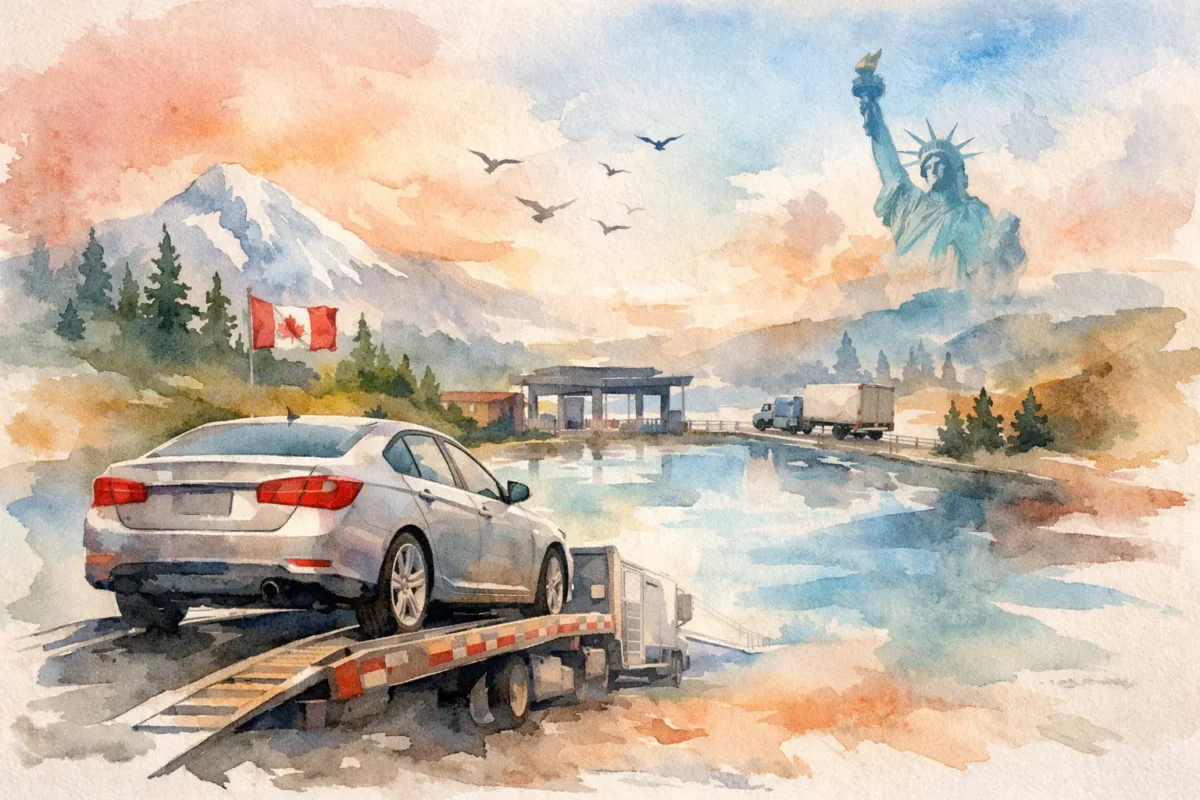
A vehicle can be ready to drive, fully paid for, and sitting a few miles from the border – yet still be unable to move because one document is missing or the border process was planned too late. To export a car from Canada successfully, you need to treat the move as both a vehicle transaction and a customs transaction. The requirements depend on where the vehicle was built, where it is titled, its age, and whether it is entering the United States permanently or temporarily.
For private buyers, dealers, auction purchasers, and commercial operators, the goal is the same: get the vehicle across legally, protect the deal, and avoid storage charges, missed transport appointments, or a border refusal. A clear plan before pickup is what makes that possible.
Start With the Vehicle’s Origin and Destination
“Exporting from Canada” can describe several different situations, and they do not all follow the same rules. A Canadian-market vehicle being sold to a U.S. buyer is generally an import into the United States. A U.S.-titled vehicle that was temporarily in Canada and is returning home may have a different path. A vehicle leaving Canada for a country other than the United States may involve Canadian export reporting and the destination country’s import requirements.
For a permanent move from Canada into the U.S., the key question is whether the vehicle is admissible under U.S. safety and emissions rules. Most vehicles originally manufactured for the U.S. market are easier to document, but that does not eliminate the need for proper customs entry. Canadian-spec vehicles can also be eligible, but their labels, equipment, and compliance history must be reviewed carefully.
Do not assume that a vehicle can cross simply because the make, model, and year were sold in both countries. A label on the driver’s door, the vehicle identification number, emissions information, and recall status can all affect the file.
Documents Needed to Export a Car From Canada
The paperwork should be assembled before transport is dispatched or the buyer books a flight to collect the vehicle. Border agencies and carriers need documents that match exactly. A misspelled owner name, incomplete VIN, open lien, or unreadable registration can delay release.
For most cross-border vehicle moves, the file should include the original ownership document or title, bill of sale, VIN details, photo identification for the importer, and any available registration records. If there is financing on the vehicle, obtain written lienholder authorization before attempting to export it. A dealer sale may also require dealer ownership documents, purchase paperwork, and authorization for the person or company handling the move.
The vehicle’s compliance labels matter as much as the ownership documents. For U.S. entry, importers commonly need manufacturer labeling that supports compliance with Department of Transportation and Environmental Protection Agency requirements. Depending on the vehicle and its origin, the entry may require DOT and EPA declarations, supporting manufacturer information, or a compliance plan handled through a qualified importer.
Recall clearance is another item that should be addressed early. An open safety recall may not always stop a vehicle from moving, but it can create complications for registration, resale, or Canadian import processing when the vehicle is moving in the other direction. Resolve the status before the vehicle reaches the border whenever possible.
Be Careful With the 72-Hour Title Rule
The 72-hour prior notice requirement is frequently misunderstood. It applies to used self-propelled vehicles being exported from the United States and generally requires title documentation to be submitted to U.S. Customs and Border Protection in advance at the appropriate export location. It is not a substitute for the documentation required to bring a vehicle from Canada into the United States.
If your vehicle has a U.S. title and first left the U.S. for Canada, confirm whether the prior export was completed correctly before arranging its return. If the vehicle is Canadian-titled and moving south for the first time, the focus is typically on U.S. import admissibility, customs entry, and proper ownership records. The facts matter, so do not use a checklist designed for a different direction of travel.
Confirm U.S. Import Compliance Before You Buy
The best time to identify a compliance problem is before money changes hands. This is particularly important for auction purchases, modified vehicles, gray-market vehicles, commercial trucks, RVs, and vehicles with replacement engines or altered emissions equipment.
Start with the VIN and clear photos of the certification labels. Verify the vehicle’s country of manufacture, model year, and whether it was originally built to U.S. standards. Older vehicles may qualify for exemptions based on age, but age alone does not answer every customs, emissions, or state registration question.
Modified vehicles deserve additional scrutiny. Lift kits, deleted emissions components, aftermarket lighting, altered bumpers, and non-original engines can create compliance concerns even when the vehicle began life as a U.S.-spec model. Heavy-duty trucks, buses, trailers, machinery, and RVs may also require a more detailed review because their classification and documentation can differ from a standard passenger car.
A professional review before purchase can prevent a costly surprise. It is far less expensive to verify eligibility before bidding than to discover the vehicle cannot be released, registered, or economically corrected after it reaches the border.
Plan the Customs Entry and Border Timing
A vehicle does not simply drive up to the border and become imported. Customs entry information must be prepared accurately, duties and taxes must be evaluated, and the importer must be ready to present the correct supporting documents. The value declared should match the transaction records. Trying to use a low value without support can lead to questions, delays, and penalties.
Duty treatment depends on factors such as the vehicle’s country of origin and classification, not simply where the vehicle was purchased. Sales tax rules are separate from federal customs requirements and may be collected or addressed at the state level after entry. Buyers should also check their home state’s registration rules before committing to a purchase, especially when buying a vehicle with a branded title or unusual equipment.
Timing matters. Border offices, carriers, and customs processing do not operate on a buyer’s preferred schedule. Avoid planning a same-day pickup, a weekend crossing without confirmation, or a transport delivery that arrives before the clearance file is ready. Build time into the transaction for document review, customs coordination, and any corrections that may be needed.
Choose the Right Transport Method
The right transport method depends on the vehicle’s condition, value, size, and destination. A running passenger vehicle may move on an open auto carrier, while a collector car, low-clearance vehicle, or high-value purchase may justify enclosed transport. Non-running vehicles need equipment that can load them safely. Trucks, tractors, machinery, trailers, and RVs require transport planning based on dimensions, weight, loading points, and route restrictions.
Do not overlook insurance and condition reporting. Before the vehicle is collected, take detailed photos of all sides, the interior, wheels, glass, and any existing damage. Confirm who is responsible for the vehicle at each handoff – seller to carrier, carrier to customs, and customs release to final delivery. This record protects both the buyer and the transporter if a damage claim or condition dispute arises.
Storage may also be necessary when a vehicle arrives before paperwork is complete or a carrier connection is delayed. It is useful when planned, but expensive when it results from avoidable document issues. Coordinating customs release and transport as one operation reduces the chance that the vehicle sits at a yard waiting for instructions.
Avoid the Mistakes That Stop Cross-Border Moves
The most common delays are preventable: buying before confirming admissibility, relying on photocopies when originals are required, failing to clear a lien, submitting documents with mismatched VINs, and booking transport before customs requirements are understood. Another costly mistake is treating a commercial vehicle like a passenger car. Commercial equipment can involve additional classifications, permits, and safety considerations.
Clear communication among the seller, buyer, transporter, and customs representative is essential. Everyone should know the pickup location, border crossing plan, document status, importer name, and final delivery address. When any of those details change, update the file before the vehicle reaches the border.
For buyers and dealers who want one accountable point of contact, Bidbuy Importers can coordinate compliance review, customs processing, required export documentation, storage, and vehicle transport between Canada and the United States. The right support turns a complicated border move into a controlled process with fewer surprises.
Before you release funds or schedule pickup, have the VIN, ownership documents, compliance labels, and destination plan reviewed together. That simple step gives you the best chance of receiving your vehicle on time, legally cleared, and ready for the road.