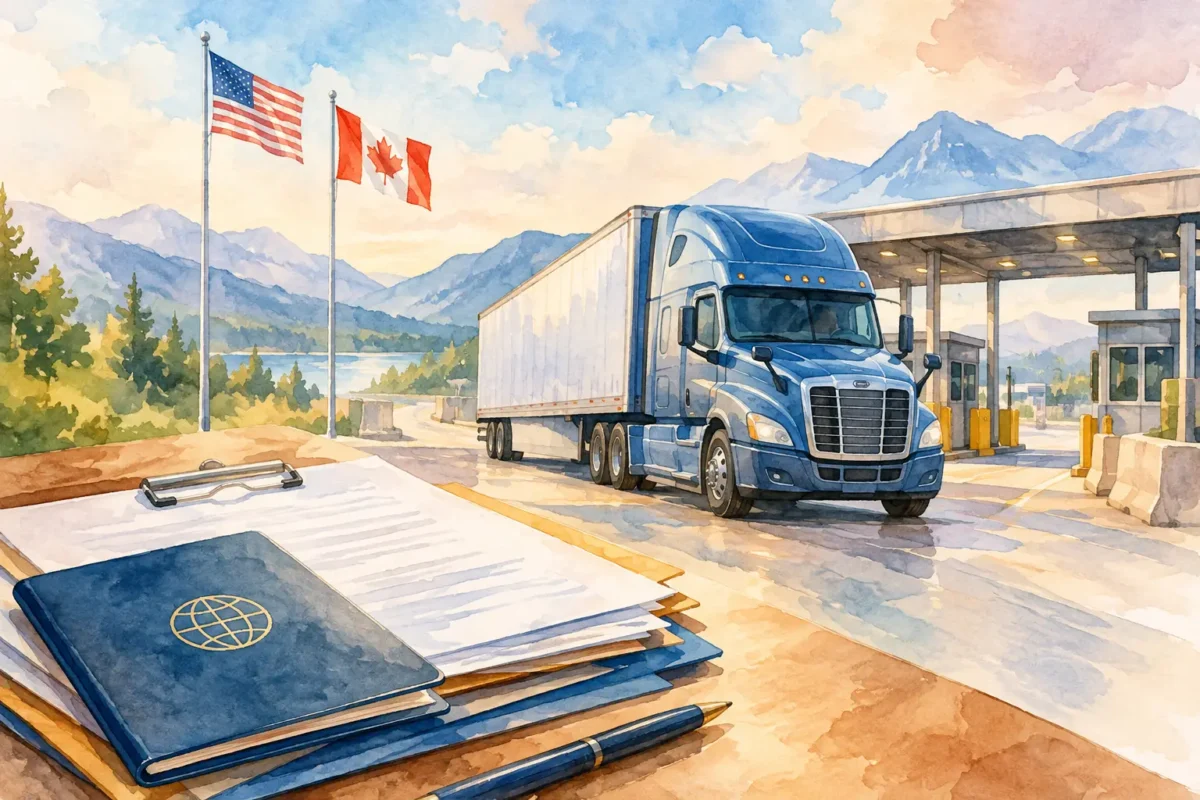
A commercial truck can be ready to drive, insured, and paid for, yet still miss its border crossing because one document does not match another. This commercial truck documentation guide helps buyers, dealers, carriers, and commercial operators prepare the records needed to move a truck between the United States and Canada without avoidable customs, title, or compliance delays.
Truck documentation is not one-size-fits-all. A late-model highway tractor, a used dump truck, a cab-and-chassis unit, and a specialty service vehicle can each trigger different ownership, export, import, and safety requirements. The truck’s age, weight rating, country of manufacture, condition, and intended use all matter.
Start With the Truck’s Identity and Ownership Records
The vehicle identification number is the foundation of every file. Confirm that the VIN on the title, bill of sale, vehicle, auction paperwork, and customs documents is identical. A single transposed character can stop an export filing, delay customs release, or create a problem when registering the truck after import.
For most titled commercial trucks, the core ownership package includes the original title or a valid ownership document, a detailed bill of sale or purchase invoice, and lien-release paperwork when a lender is shown on the title. The invoice should clearly identify the buyer and seller, purchase price, currency, VIN, year, make, model, and odometer reading where applicable. If the seller is a business, use the legal business name rather than an informal trade name.
A title that is branded, altered, unsigned, or still subject to a recorded lien requires extra attention before transport is booked. Salvage, rebuilt, nonrepairable, and parts-only designations can affect admissibility and registration. Do not assume that a truck with a clean physical appearance has clean title status.
For untitled equipment, certain older trucks, trailers, machinery, or off-road units, alternate proof of ownership may be accepted in some situations. That can include a transferable registration, manufacturer certificate of origin, court-issued ownership record, or a properly documented chain of bills of sale. The acceptable record depends on the vehicle and the jurisdiction, so verify this before the unit reaches the border.
Commercial Truck Documentation Guide: U.S. Export Requirements
When exporting a titled self-propelled vehicle from the United States, U.S. Customs and Border Protection generally requires advance submission of the ownership document to the port of export. The common rule is 72 hours before export, but port procedures and document-delivery instructions can vary. Missing that deadline is one of the fastest ways to turn a scheduled crossing into a rescheduled move.
The exported title must be complete and readable. If there are multiple owners, required signatures must be present. If the truck is financed, obtain the lender’s written authorization and lien-release documentation in the form required for export. A photocopy is not always enough when the original title is required.
The shipment may also require Electronic Export Information filed through the Automated Export System. When an AES filing is required, the filing generates an Internal Transaction Number, commonly called an ITN. The carrier and customs team need that information before movement. Whether a filing is required can depend on the transaction value, destination, type of vehicle, exporter, and applicable export rules. Do not treat the ITN as an afterthought on pickup day.
Export records should match the actual movement. If the truck is being hauled on a trailer rather than driven across, identify the correct exporting vehicle, conveyance, and port. If a tractor and trailer are sold together, determine whether they are documented as separate assets. They often have separate VINs, titles, values, and compliance considerations.
Prepare the Canadian Import File Before Arrival
For trucks entering Canada, the customs entry needs an accurate commercial invoice, ownership documents, VIN details, country of origin, purchase price, and a clear description of the vehicle. Customs valuation is based on the actual transaction and supporting records, not simply an estimated market value. Keep auction invoices, wire confirmations, purchase contracts, and repair or condition disclosures available if valuation questions arise.
Duty treatment depends heavily on origin. A truck built in the United States, Canada, or Mexico may qualify for preferential treatment when the proper origin certification and supporting facts are available. A vehicle manufactured elsewhere may be subject to duty even if it was purchased in the United States. Do not confuse the country of purchase with the country of origin.
Goods and Services Tax applies to most commercial vehicle imports into Canada, and provincial tax treatment depends on the destination and registration details. A properly prepared customs entry helps prevent surprises, but tax and duty should be budgeted before the purchase is finalized.
Many passenger vehicles and lighter trucks fall under the Registrar of Imported Vehicles program, but not every commercial truck does. Heavy trucks, buses, specialty equipment, and vehicles above applicable weight thresholds may follow different Transport Canada and provincial registration processes. The correct path depends on the vehicle classification, not the seller’s description of it as a “truck.”
Confirm Safety and Environmental Compliance
A commercial truck that clears customs is not automatically ready for road use. U.S. and Canadian safety and emissions rules can apply differently depending on direction of travel, vehicle age, gross vehicle weight rating, manufacture location, and whether the unit is being imported permanently or temporarily.
For a truck entering the United States, review National Highway Traffic Safety Administration and Department of Transportation requirements, along with Environmental Protection Agency requirements where applicable. The manufacturer compliance label, engine emissions label, and VIN information should be reviewed early. Missing labels, modified emissions equipment, or a truck built to a non-U.S. specification can create a much more complicated import file.
For a truck entering Canada, verify admissibility and any required safety documentation before the vehicle is released for transport. Recall clearance may be relevant for vehicles within programs that require it. If the truck will be registered for commercial operation, the buyer may also need to meet provincial inspection, safety fitness, axle-weight, and carrier-registration requirements after import.
This is where condition matters. A complete, roadworthy truck and an incomplete cab-and-chassis unit may be treated differently. A repairable salvage truck can require a different registration path than a clean-title unit. A temporary import for repair, display, or short-term commercial use may have rules that do not apply to a permanent import.
Build a Border File That Your Driver Can Use
Keep the working border file organized in one place, with clear copies for the driver, carrier, broker, buyer, and seller as needed. The file should contain the title or ownership record, bill of sale, invoice, VIN photos, lien release, export confirmation, AES ITN when required, customs instructions, and all compliance records relevant to the unit.
For a multi-unit purchase, label every document by VIN. Do not combine documents for several tractors, trailers, and pieces of equipment in one unlabeled packet. Border teams need to connect each vehicle to its own ownership and value records quickly.
Before dispatch, confirm the crossing location, expected arrival time, driver identification requirements, and whether the truck is being driven or transported. A commercial carrier also needs instructions that match the customs entry and export filing. Last-minute changes to the port, method of transport, or consignee can require corrections that take time.
Common Documentation Problems That Cause Delays
The most frequent issues are simple but costly: a title signed in the wrong place, a VIN mismatch, an unpaid lien, an invoice that does not identify the truck correctly, or export paperwork submitted too late. Another recurring problem is assuming that an auction receipt alone proves transferable ownership. It may not.
Value documentation also deserves attention. A low invoice amount without supporting proof can lead to a customs review. If the truck was purchased damaged, inoperable, or at a discount, retain condition reports, auction listings, repair estimates, and payment records that explain the price.
Finally, separate border clearance from operating authority. Customs documents allow a truck to enter, but they do not replace insurance, safety inspections, apportioned registration, International Registration Plan credentials, International Fuel Tax Agreement reporting, or motor carrier authority when those requirements apply to your operation.
A well-prepared truck file protects the purchase, the schedule, and the ability to register the unit once it arrives. Bidbuy Importers can coordinate export notice, customs clearance, compliance paperwork, and transport so the documents are handled before your truck is waiting at the border.