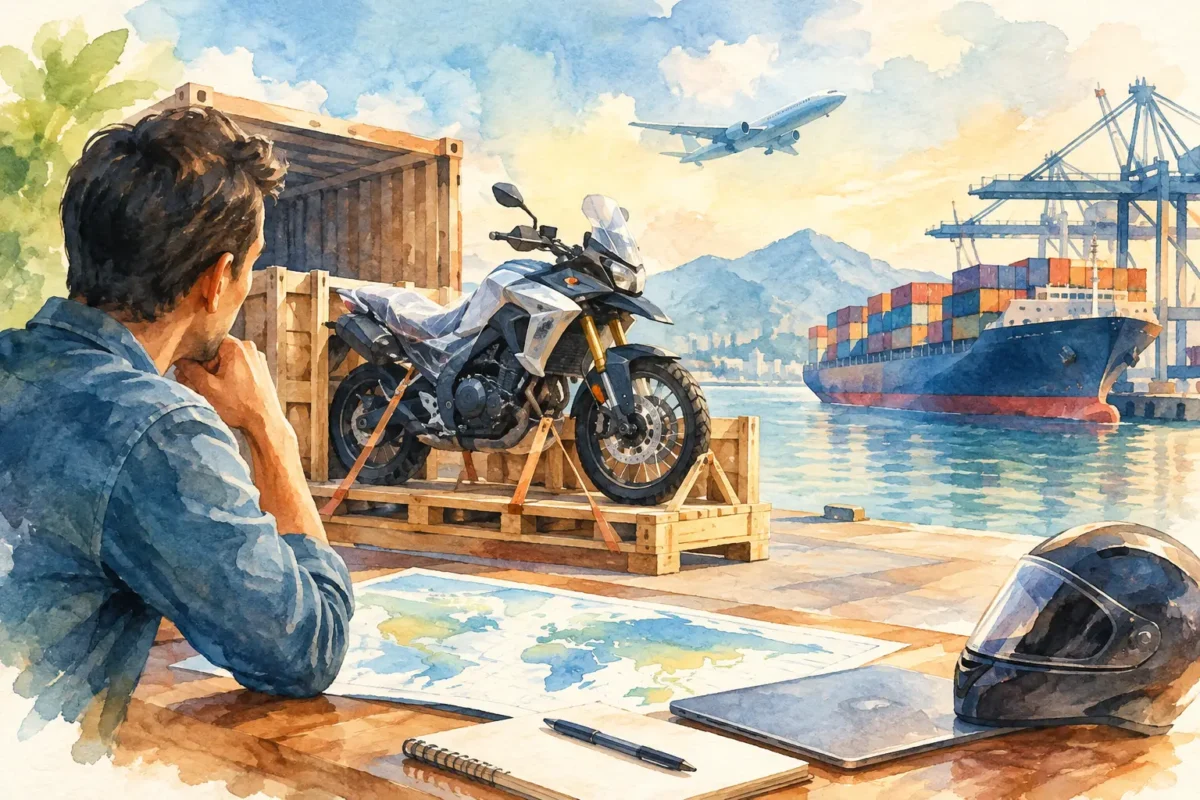
A motorcycle can look like the perfect purchase until it reaches the border with a missing title, an unreadable VIN, or paperwork that does not match the bike. This motorcycle import preparation guide is built to prevent that outcome. Whether you are buying a sport bike from a private seller, a vintage motorcycle at auction, or inventory for a dealership, preparation needs to begin before funds change hands.
Cross-border motorcycle importing is manageable when the documents, compliance requirements, customs entry, and transport plan are handled in the right order. It becomes expensive when a motorcycle arrives at the border before those details are confirmed.
Start With the Motorcycle, Not the Shipping Quote
Before arranging transport, confirm that the motorcycle itself can be imported into the destination country. A low purchase price does not make a bike a good import candidate if it cannot meet applicable safety, emissions, registration, or recall requirements.
For motorcycles moving from the United States into Canada, admissibility can depend on the model year, manufacturer labeling, recall status, and eligibility under the Registrar of Imported Vehicles process. Certain motorcycles may require modifications, while others may not be eligible for routine import at all. Older, specialty, off-road, or modified motorcycles can have different requirements than a standard road-legal production bike.
For motorcycles moving into the United States, the review may involve National Highway Traffic Safety Administration and Department of Transportation requirements, along with Environmental Protection Agency standards. The original compliance labels matter. A bike without proper manufacturer labels, or one that has been heavily modified, can require additional review before it is cleared.
Ask the seller for clear photos of the VIN plate, certification labels, odometer, and the entire motorcycle. Compare the VIN on the frame to the title and bill of sale character by character. One incorrect digit can delay release, title processing, and registration.
Verify Ownership Documents Before You Buy
The original ownership document is not a formality. It is the document that supports export, customs clearance, and eventual registration. Do not assume a photocopy, auction invoice, or seller message can replace a valid title.
For a titled motorcycle, check that the title is original, readable, properly assigned, and free of unexpected liens. The seller name should align with the person or business selling the bike. If a dealer is selling it, confirm that the dealer has authority to transfer ownership. If a lien is shown, obtain appropriate lien release documentation before transport is scheduled.
A bill of sale should clearly identify the buyer, seller, purchase price, date of sale, motorcycle year, make, model, and VIN. Keep the purchase records available even when the title shows a value. Customs authorities may review the declared value, particularly when a purchase price appears unusually low for the motorcycle.
Before committing to the transaction, gather these records:
- Original title or acceptable ownership document
- Signed bill of sale or purchase invoice
- VIN and certification-label photographs
- Recall clearance information when importing into Canada
- Any loan payoff or lien release documents
Auction buyers should move quickly after winning a motorcycle. Storage charges, release deadlines, and title processing timelines can all affect the cost and timing of the import.
Plan the 72-Hour U.S. Export Notice
When a motorcycle is being exported from the United States, the original title generally must be submitted to U.S. Customs and Border Protection at least 72 hours before export. This is one of the most common timing issues for first-time buyers.
The requirement is tied to the port of export, not simply the date a truck picks up the bike. If you schedule a carrier to arrive at the border without allowing for the required title review period, the shipment may be turned back or delayed. Weekends, holidays, incorrect port submissions, and title discrepancies can extend the timeline further.
Do not release the original title casually to a seller, carrier, or unrelated third party. Confirm who is responsible for submitting it, where it must be sent, how it will be tracked, and when the export clearance is expected. A professional import coordinator can manage this process and keep the customs timeline aligned with pickup and delivery arrangements.
Confirm Customs Value and Entry Information
Customs entry starts with accurate facts. The declared value should reflect what was actually paid for the motorcycle, supported by the bill of sale, auction invoice, payment record, or other purchase documentation. Trying to reduce duties or taxes by understating the value creates unnecessary risk and can lead to penalties, holds, or further review.
The entry also depends on the motorcycle’s country of origin, not just where it was purchased. A Japanese-built motorcycle purchased in the United States may have different duty treatment than a motorcycle manufactured in North America. The VIN, manufacturer information, and supporting documents help determine the correct classification and assessment.
Tax treatment also varies by direction of travel, purchaser status, and destination. Dealers, private buyers, commercial operators, and auction purchasers may have different documentation needs. If the motorcycle is part of a larger shipment with parts, accessories, or additional vehicles, each item should be disclosed and accounted for correctly.
Prepare the Motorcycle for Transport and Inspection
A motorcycle should be ready for both safe transport and border inspection. Remove personal belongings, unsecured accessories, and loose items from saddlebags or storage compartments. Customs authorities can inspect shipments, and personal goods inside a motorcycle shipment can complicate the entry.
Document the motorcycle’s condition before pickup. Take date-stamped photos from all sides, including close-ups of existing scratches, dents, cracked fairings, tires, wheels, and the odometer. Photograph the VIN again after loading if possible. This protects the buyer, seller, and carrier if a condition question arises later.
Transport method depends on the motorcycle’s condition, value, route, and timeline. Open transport can be practical for standard motorcycles in good operating condition. Enclosed transport may be the better choice for high-value collector bikes, custom motorcycles, or bikes moving during severe weather. A non-running motorcycle needs advance disclosure because loading equipment and carrier availability may differ.
Do not assume a seller can deliver the bike to a border location. Confirm pickup access, operating condition, keys, battery status, tire condition, and whether the seller can release the motorcycle to the carrier. A missed pickup can create storage charges or force a rescheduled border appointment.
Know the Canada-Specific Requirements
Motorcycles entering Canada require more than a customs release. Depending on the motorcycle and its eligibility, the process can include RIV filing, recall clearance, inspection requirements, and payment of applicable taxes and fees.
Recall clearance should be addressed early. A manufacturer letter or approved recall documentation may be required to show that there are no outstanding safety recalls. Do not wait until the motorcycle is already in Canada to learn that the needed letter will take time to obtain.
Canadian importers should also consider provincial registration requirements. Federal import approval does not automatically mean the motorcycle is ready to register in every province. Insurance, safety inspections, provincial taxes, lighting requirements, and salvage branding can affect what happens after the bike leaves the border.
Avoid the Mistakes That Create Border Delays
Most import delays are preventable. The recurring problems are incomplete titles, VIN mismatches, late export submissions, missing recall documentation, unsupported declared values, and transport booked before compliance is confirmed.
Another mistake is treating a motorcycle like a small parcel shipment. It is a regulated vehicle. The fact that it can fit in a pickup bed or enclosed trailer does not change the export and import rules. A private buyer may be able to handle parts of the process personally, but that approach requires careful control of every deadline and document.
For dealers moving recurring inventory, consistency matters even more. A repeatable intake process for VIN review, title collection, purchase records, export filing, customs instructions, and transport scheduling reduces avoidable holds and helps keep inventory moving.
Put One Team in Charge of the Timeline
The strongest import plan connects the seller, buyer, title documents, export requirements, customs entry, and carrier schedule before the motorcycle starts moving. When those tasks are split among multiple parties without a clear coordinator, a small paperwork issue can become a border delay.
Bidbuy Importers coordinates cross-border vehicle compliance, customs processing, export documentation, storage, and transport for motorcycles and other vehicles moving between the United States and Canada. The right support is especially valuable when the purchase involves an auction, a tight delivery deadline, a specialty bike, or a seller unfamiliar with export procedures.
Before you schedule pickup, put the VIN, title, bill of sale, destination, and planned border crossing in front of an import professional. A short review before transport can save days of delay after the motorcycle is already on the road.