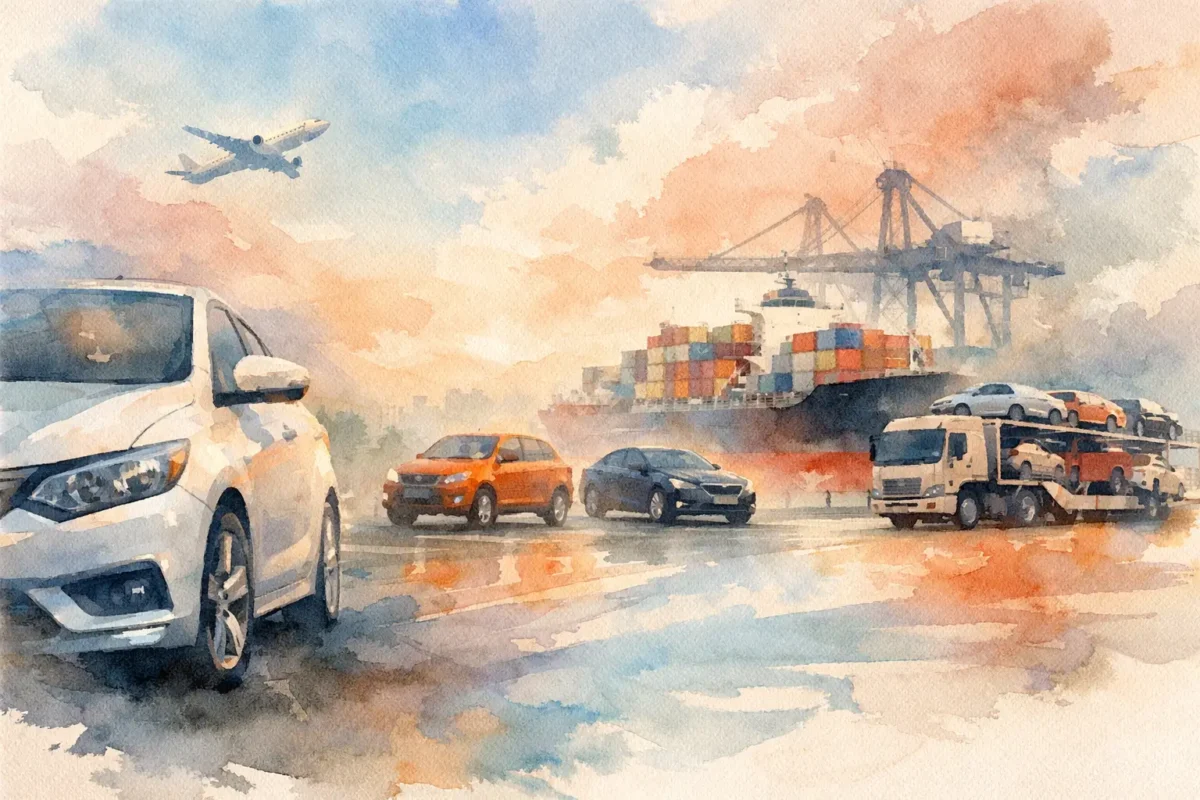
A vehicle bought at a U.S. auction is not inventory until it has cleared the border, met applicable requirements, and arrived at your lot. Dealer vehicle import services turn that gap between purchase and sale-ready inventory into a managed process, with the customs, compliance, title, and transport work handled in the proper order.
For a dealer moving one specialty vehicle or a steady volume of auction purchases, the border is not simply a shipping lane. It is a controlled handoff between agencies, carriers, lenders, auction yards, brokers, and customers. A missed document, an uncleared recall, or a title submitted too late can leave a vehicle sitting at the border while your floorplan costs and customer commitments continue.
What Dealer Vehicle Import Services Should Handle
A capable import partner does more than book a truck. The work starts by reviewing the vehicle, its country of origin, title status, and destination before transport is scheduled. That early review helps identify whether the vehicle can be imported as planned and which documents must accompany it.
For dealers importing into the United States, this may include coordinating requirements related to the National Highway Traffic Safety Administration, Department of Transportation, Environmental Protection Agency, and U.S. Customs and Border Protection. Some vehicles can enter under standard conformity rules. Others may require additional review, modification coordination, or handling through a registered importer, depending on the vehicle’s age, specifications, and compliance labeling.
For vehicles moving into Canada, the process can involve recall clearance, admissibility review, Registrar of Imported Vehicles processing, customs release, and provincial registration considerations. A vehicle that appears identical to a Canadian model is not automatically admissible. Manufacturing labels, model-year rules, open recalls, and vehicle history all matter.
The best service providers also manage the movement around the paperwork. That includes arranging pickup from auctions, dealerships, ports, private sellers, or storage yards; coordinating secure storage if timing changes; and delivering the vehicle to the dealer’s location after release. When the broker and transport coordinator work from the same operating plan, there are fewer handoffs and fewer opportunities for costly confusion.
The Documents That Can Delay a Dealer Shipment
Titles are one of the most common reasons cross-border vehicle moves stall. When exporting a vehicle from the United States, the original title or accepted ownership documentation generally must be submitted to the appropriate U.S. port at least 72 hours before export. That deadline is not a suggestion, and it cannot be fixed after a truck is already waiting at the border.
Dealers should also expect to provide purchase documents, vehicle identification number details, buyer and seller information, and any available compliance records. Lien releases require special attention. If a lender still has an interest in the vehicle, authorization and supporting paperwork must be in order before export arrangements are finalized.
Recall clearance is another critical checkpoint for Canadian imports. A recall letter must be specific to the vehicle identification number and issued by an acceptable source. A generic statement about a make or model may not satisfy the requirement. Dealers who confirm recall status early avoid discovering an open campaign after the vehicle has already been transported to the border.
Commercial units bring additional variables. Semi tractors, buses, trailers, RVs, machinery, and heavy-duty trucks may have different documentation, safety, weight, or transport requirements than a passenger vehicle. They should be reviewed as their own category, not treated as oversized cars.
Why Timing Matters More Than Most Dealers Expect
Cross-border logistics runs on deadlines that do not always match auction release dates or retail delivery promises. An auction may release a unit quickly, but title availability can lag. A carrier may have an open spot, but the 72-hour export notice may still be pending. A vehicle may clear customs efficiently, yet final delivery may need to wait for a local transporter or dealer receiving schedule.
This is why the lowest freight quote is not always the lowest total cost. A carrier without border experience can create delays through incomplete paperwork, missed port procedures, or poor communication. The resulting storage charges, missed sales opportunities, and staff time can outweigh a small difference in transport pricing.
A realistic schedule starts with document readiness. Once the title, purchase documents, compliance information, and import plan are confirmed, export notice, customs entry, and carrier pickup can be coordinated around each other. Dealers importing multiple units benefit from treating this as a repeatable workflow rather than arranging each shipment from scratch.
Choosing Dealer Vehicle Import Services for Your Operation
The right provider should be able to explain who is responsible for every stage of the move. Ask whether customs release is handled directly or passed to another party, whether the company can coordinate U.S. export requirements, and whether it has practical experience with the exact vehicle types you buy.
A full-service partner should also be clear about what happens when plans change. Auctions reschedule releases, titles arrive late, weather closes routes, and customers revise delivery locations. The value of experienced coordination is not that problems never occur. It is that there is a knowledgeable team ready to adjust the plan without losing control of the documentation or the vehicle.
For high-volume dealers, reporting and consistency matter as much as individual shipment execution. You need clear status updates, accurate vehicle identification number tracking, predictable document requests, and one point of contact who understands your operation. A process that works for a single collector car may not be sufficient for a dealership acquiring multiple vehicles each month.
Bidbuy Importers supports dealers with customs brokerage, compliance coordination, export filing support, storage, and vehicle transportation across the U.S.-Canada border. That integrated approach is particularly useful when inventory includes a mix of auction vehicles, retail-ready passenger cars, trucks, RVs, trailers, or commercial equipment.
Compliance Is a Sales Protection Strategy
It is tempting to view import compliance as an administrative expense. In reality, it protects the deal itself. A vehicle that cannot be legally imported, registered, or delivered on schedule can become an expensive inventory problem. The dealer may face buyer frustration, auction penalties, storage costs, retransportation, or a unit that cannot be retailed in the intended market.
Compliance review also helps dealers price purchases accurately. Duties, taxes, brokerage, transport, possible modification costs, and destination requirements can affect the true landed cost. Before bidding on a cross-border unit, dealers should understand the full path from purchase price to lot delivery. That is especially important for specialty vehicles, branded titles, older imports, and equipment that does not fit standard passenger-vehicle rules.
There is no single answer for every vehicle. A late-model Canadian vehicle built to U.S. standards may follow a different path than a European-built collector car, a heavy-duty work truck, or a fifth-wheel trailer. The right approach depends on the vehicle, documentation, origin, destination, and intended use.
Build the Import Plan Before You Buy
The strongest time to involve an import professional is before the winning bid or signed purchase agreement. Provide the VIN, year, make, model, vehicle location, title status, and destination. With those details, you can identify likely compliance issues, document needs, border timing, and transport options before money and expectations are committed.
That preparation gives your dealership a practical advantage. You can buy with confidence, quote customers more accurately, and move inventory with fewer surprises between the auction lane and your showroom. When the next cross-border opportunity appears, have the import plan ready before the gavel falls.