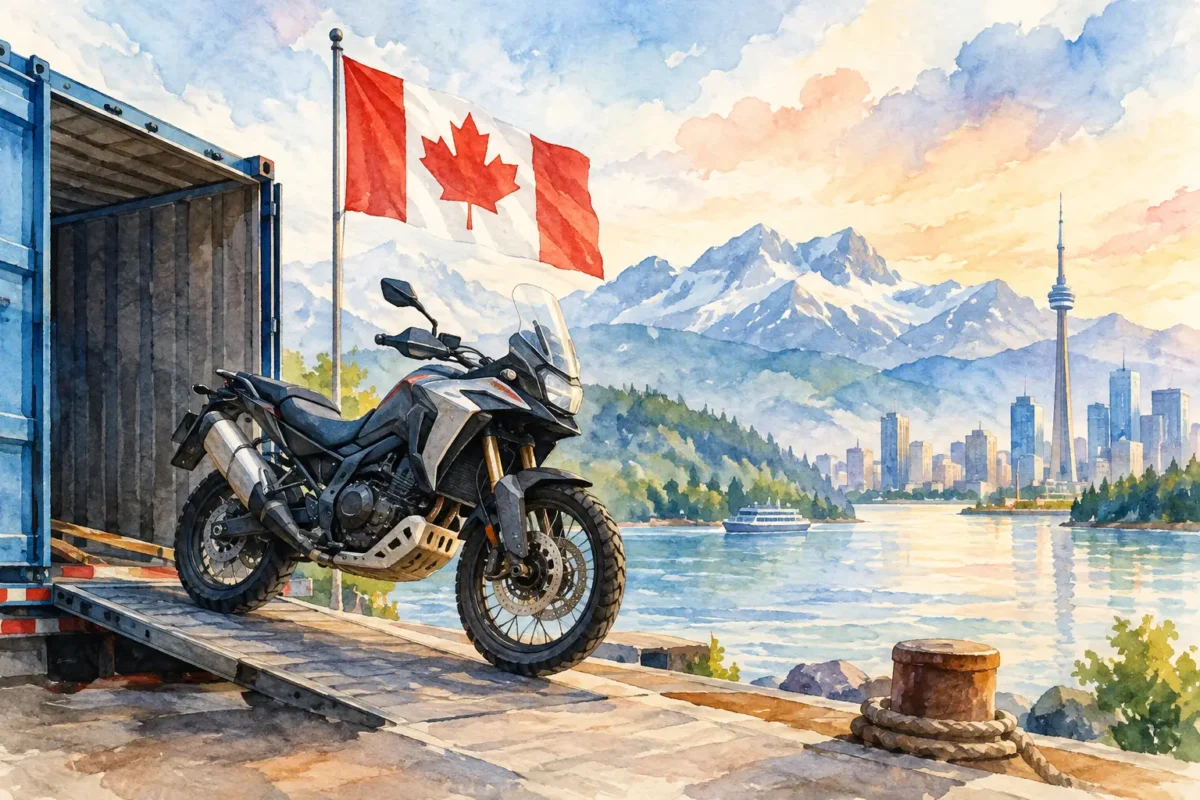
To import Canadian motorcycles into the United States, the purchase is only the first step. A clean-looking bike, a fair price, and a seller ready to meet at the border do not guarantee Customs will release it. The motorcycle must have the right ownership paperwork, meet applicable federal requirements, and arrive at the port with filings completed correctly.
For buyers, collectors, dealers, and auction customers, the most expensive problems usually come from assuming a Canadian motorcycle is automatically identical to a U.S.-market motorcycle. Sometimes it is. Sometimes a missing label, an open lien, or a last-minute export notice turns a simple pickup into a delayed shipment. The right process starts before money changes hands.
Can You Import Canadian Motorcycles Into the U.S.?
Yes, many motorcycles located in Canada can be imported into the United States. Eligibility depends on the motorcycle’s age, origin, labeling, condition, and whether it conforms to U.S. safety and emissions rules.
A motorcycle built for the U.S. market and later registered in Canada is often the most straightforward scenario. It may still carry the original U.S. Department of Transportation and Environmental Protection Agency labels, which helps establish compliance. A Canadian-market bike can require closer review, even when the make, model, and year look the same as a version sold by a U.S. dealer.
Do not rely on a seller’s statement that a motorcycle is “the same as U.S. spec.” Check the certification labels on the frame, the emissions information, and the VIN before committing to the purchase. Manufacturers can make market-specific changes that are not obvious in photos or a vehicle-history report.
Motorcycles that are at least 25 years old are generally exempt from federal motor vehicle safety standards based on age. Motorcycles that are at least 21 years old and remain in their original configuration may qualify for an EPA age-based exemption. Those rules can make vintage Canadian motorcycles attractive to collectors, but age does not eliminate customs documentation, ownership verification, or state registration requirements.
Documents Needed to Import Canadian Motorcycles
The border process depends on the documents being accurate, complete, and consistent. Names, VINs, dates, and ownership details must match across the paperwork. A typo in the VIN is not a small error when Customs is deciding whether to release a vehicle.
Before transport is scheduled, gather the original Canadian ownership document or registration, a signed bill of sale, and any lien release. Some Canadian provinces use registration documents rather than the type of title U.S. buyers expect. That can be acceptable, but the document must clearly establish transferable ownership.
You will also need the import declarations used to show compliance with DOT and EPA rules. Customs entry documentation is required for the formal import process, and duty may apply depending on the motorcycle’s classification, value, and country of origin. Canadian location alone does not determine duty treatment. A motorcycle manufactured outside North America may be treated differently than one that qualifies for preferential treatment under USMCA.
For a used, self-propelled motorcycle leaving Canada for the United States, the U.S. export side must also be handled correctly. U.S. Customs and Border Protection requires advance export documentation for used self-propelled vehicles, typically submitted at least 72 hours before export through the designated border process. The correct port matters. Sending paperwork to the wrong location, or submitting it after the motorcycle is already on a truck, can stop the move.
Check Compliance Before You Buy
The most efficient import is the one reviewed before the buyer sends the final payment. Ask the seller for clear photos of the VIN plate, the manufacturer certification label, the emissions label, the ownership document, and the odometer. If labels are missing, damaged, or unreadable, get professional guidance before arranging pickup.
DOT Safety Requirements
Federal safety compliance generally turns on whether the motorcycle was manufactured to meet U.S. Federal Motor Vehicle Safety Standards. A DOT certification label is a key item. If the bike does not conform and is not old enough for an exemption, it may need to enter through a Registered Importer process or may not be practical to import at all.
This is where buyers can make a costly mistake. Aftermarket lights, exhaust systems, and turn signals can create questions, but the larger issue is the motorcycle’s original certification status. A Canadian compliance label by itself is not the same as a U.S. DOT certification label.
EPA Emissions Requirements
The EPA label should identify that the motorcycle conforms to applicable U.S. emissions standards. A Canadian-only motorcycle may not have the needed U.S. emissions certification. Do not assume that an engine from a familiar brand automatically clears EPA requirements.
A modified motorcycle deserves extra attention. Engine swaps, removed emissions components, and non-original configurations can complicate an otherwise eligible age exemption. Collectors should preserve documentation and photographs showing the bike’s configuration before transport.
Plan the Border and Transport Together
A compliant motorcycle can still be delayed if the logistics plan is disconnected from the customs plan. The carrier needs to know which port will process the export, when the 72-hour notice has cleared, and whether the motorcycle can be delivered directly to the border or must be stored first.
Open transport may be suitable for a standard commuter bike in good condition during favorable weather. Enclosed transport is usually the better choice for high-value motorcycles, auction purchases, vintage bikes, or units that cannot be exposed to road debris and weather. A non-running motorcycle also needs loading equipment and advance notice. It cannot simply be treated like a rideable unit at pickup.
Border timing matters for sellers, carriers, and buyers. Do not schedule a seller meeting at the port before export paperwork is approved. Do not book a carrier based solely on a seller’s promise that the title or registration will be available tomorrow. Build the movement around confirmed documents, not estimates.
Common Problems That Delay Motorcycle Imports
Most border delays are preventable. They occur when paperwork is treated as an afterthought or when a buyer starts the process after the motorcycle has already been purchased and loaded.
The issues that deserve the closest attention include:
- A Canadian registration that does not show clear, transferable ownership
- An active lien with no signed and verifiable release
- VIN discrepancies between the bike, bill of sale, and ownership paperwork
- Missing DOT or EPA labels on a motorcycle that is not old enough for an exemption
- Late or incorrectly routed 72-hour export documentation
- A carrier scheduled before Customs clearance and port instructions are confirmed
There can also be state-level issues after federal release. Your state motor vehicle agency may require the CBP entry record, the foreign ownership document, a bill of sale, and additional inspection or tax paperwork to issue a title and registration. Federal import approval does not automatically mean every state registration requirement has been met.
When Professional Import Help Makes Sense
A buyer bringing in one newer, Canadian-market motorcycle may need more coordination than a dealer importing several clearly compliant U.S.-spec units. The risk is not just a paperwork fee. A missed requirement can create storage costs, carrier rescheduling, seller disputes, and a motorcycle sitting at the border while everyone waits for answers.
Bidbuy Importers coordinates the compliance review, export notice process, customs entry, border release, storage, and transportation needed to move motorcycles across the U.S.-Canada border with one accountable point of contact. That is especially valuable for auction buyers, long-distance private purchases, vintage motorcycles, and transactions where the seller has never exported a vehicle before.
Before you release payment or dispatch a truck, have the VIN, labels, ownership record, and intended border crossing reviewed. A few careful checks at the start can protect the motorcycle, the transaction, and your delivery schedule all the way home.