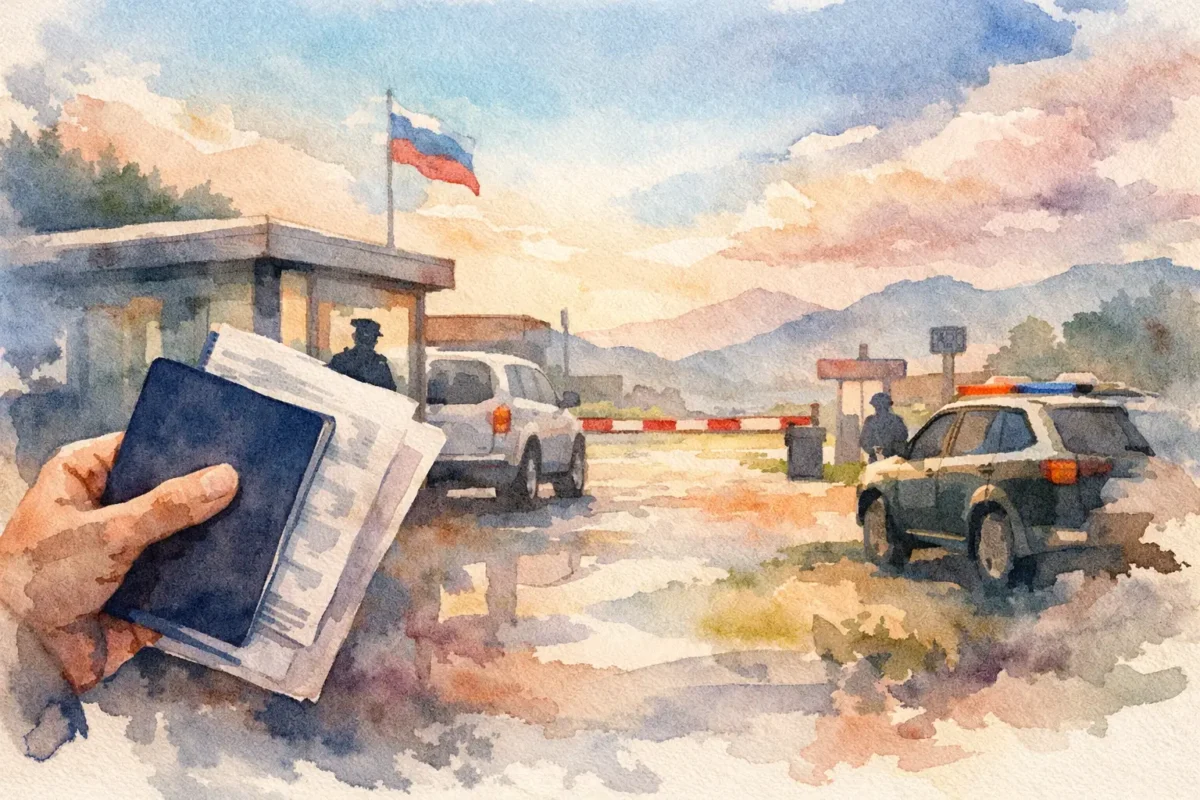
A clean title and a vehicle that runs well are not always enough to move across the U.S.-Canada border. Recall status verification can become the issue that stops an otherwise straightforward import, especially when a vehicle is entering Canada and must be processed through the Registrar of Imported Vehicles (RIV). The best time to address it is before you book transport, submit export paperwork, or arrive at the border with a deadline.
For private buyers, dealers, auction purchasers, and commercial operators, the practical goal is simple: confirm whether the specific VIN has an open safety recall and obtain the right proof of recall clearance when it is required. That sounds basic, but the document source, wording, and timing can vary by manufacturer, vehicle age, and the country of import.
What Recall Status Verification Actually Confirms
Recall status verification is a VIN-specific check that identifies whether a manufacturer has issued an unresolved safety recall for a vehicle. A recall is not the same as a maintenance recommendation, warranty repair, service campaign, or accident history item. It involves a defect or noncompliance that the manufacturer has identified as safety-related and is expected to correct.
A VIN search may show one of three broad outcomes: no open recalls, an open recall that still needs repair, or a recall that has been completed. For cross-border purposes, the key question is usually whether there is an outstanding safety recall at the time of processing – not whether the vehicle has ever been recalled.
The distinction matters. A vehicle can have a history of recalls and still be eligible to import if all applicable recall work has been completed. Conversely, a late-model vehicle in excellent condition can face a delay if one open recall remains on its VIN.
Why Recall Clearance Matters for Canadian Imports
Vehicles imported into Canada commonly require RIV processing, provided they are on the admissible vehicle list and do not fall into an exempt category. As part of that process, importers may need acceptable recall clearance documentation demonstrating that there are no outstanding safety recalls for the VIN.
This is where buyers often lose time. A generic online recall lookup can be useful for an early screening, but it may not be enough as formal proof for RIV. The importer needs documentation that clearly identifies the vehicle and confirms its recall status in language the reviewing party can accept.
Manufacturers are typically the primary source for a recall clearance letter or equivalent official confirmation. Some manufacturers provide VIN-specific information through an online portal, while others require a request through customer relations or a franchised dealer. Processes change, and a document that was accepted for one brand or model year should not be assumed to work for every vehicle.
A clearance letter generally needs to match the VIN exactly and state that there are no outstanding safety recalls. If the letter lists an open recall, the repair should be completed before attempting final clearance. Keep the repair invoice or dealer completion record as supporting evidence, even if the new letter becomes the main document.
Do Not Confuse a Recall Letter With an Inspection
A recall clearance document and a Canadian inspection are separate requirements. Depending on the vehicle and import pathway, you may also need to complete the federal inspection required through the RIV program after entry. Provincial registration, insurance, emissions requirements, and commercial vehicle rules may create additional steps.
A recall letter does not prove that the vehicle meets every Canadian standard. It only addresses the open-recall question. The same is true in reverse: a passed inspection does not necessarily replace recall clearance documentation.
The U.S. Side Has Different Compliance Questions
When importing a vehicle into the United States, recall status may be a sensible safety and purchase-risk check, but it is not automatically the same border requirement that it can be for a Canadian RIV import. U.S. entry focuses on the vehicle’s eligibility under applicable Department of Transportation, National Highway Traffic Safety Administration, Environmental Protection Agency, Customs and Border Protection, and state-level requirements.
For a U.S.-bound vehicle, the larger issue may be whether the vehicle was originally built to U.S. standards, qualifies for an exemption, or must be handled through a Registered Importer. An open recall should still be taken seriously, particularly if the vehicle will be sold, transported long distances, or used commercially. But do not assume that a Canadian recall-clearance workflow applies unchanged to every U.S. import.
This is one reason cross-border buyers should avoid relying on a single checklist found online. The correct process depends on direction of travel, VIN origin, vehicle type, model year, and the exact import program involved.
When to Verify Recall Status
Start the check before you commit to a purchase whenever possible. Auction listings, private-party sales, and online marketplaces may not disclose every open recall. A seller saying that the vehicle has “no issues” is not formal confirmation, and a vehicle history report may not show the same current status as the manufacturer.
For a smooth transaction, complete the following steps in order:
- Obtain the full 17-character VIN from the seller or auction before payment.
- Check current recall information through the manufacturer or an authorized dealer.
- Ask for a VIN-specific recall clearance letter if the vehicle is headed to Canada and RIV documentation is expected.
- Resolve any open recall before transport and request updated proof after the repair is recorded.
- Send the document package to your import coordinator early enough to identify wording, VIN, or date issues before border processing.
Timing is especially important for auction purchases. You may have limited free storage, a fixed pickup window, title-release timing, and a transport appointment already in motion. Waiting until the vehicle reaches a border warehouse to request a manufacturer letter can create storage charges and scheduling changes that were completely avoidable.
Common Documentation Problems That Cause Delays
The most common issue is a mismatch between the VIN on the recall document and the VIN on the title or vehicle. One incorrect character can lead to rejection or a request for clarification. Check every character, including letters and numbers that are easy to confuse.
Another problem is vague language. A document that says a vehicle has been serviced at a dealer is not always the same as a statement that there are no outstanding safety recalls. Likewise, a generic manufacturer webpage without the VIN, a screenshot with missing details, or an undated message may not satisfy a formal document request.
Imported, gray-market, specialty, and discontinued-brand vehicles can require more research. The original manufacturer may no longer operate in North America, the VIN may not appear in a local database, or the vehicle may be ineligible for standard import channels altogether. Heavy-duty trucks, RVs, buses, trailers, machinery, and modified vehicles also deserve separate review because their documentation and regulatory paths are not identical to those for a standard passenger car.
Build Recall Clearance Into the Whole Import Plan
Recall documentation should be handled alongside the title, bill of sale, export notice, customs documents, and transport scheduling – not as a last-minute add-on. For exports from the United States, title submission and 72-hour prior notice requirements can drive the timeline. For imports into Canada, admissibility and RIV requirements can determine whether the purchase makes sense before the vehicle ever moves.
A professional cross-border coordinator can identify which documents apply to your route and vehicle type, then flag gaps before they become border delays. Bidbuy Importers coordinates recall clearance assistance with customs, RIV processing, export documentation, storage, and vehicle transport so customers are not left trying to solve a compliance issue after the truck has arrived.
If you are buying a vehicle for immediate use, do not treat recall status as paperwork to handle later. Confirm the VIN, obtain the right evidence, and keep your files organized before pickup. That one early step can protect your delivery date, your budget, and your ability to put the vehicle on the road when it arrives.