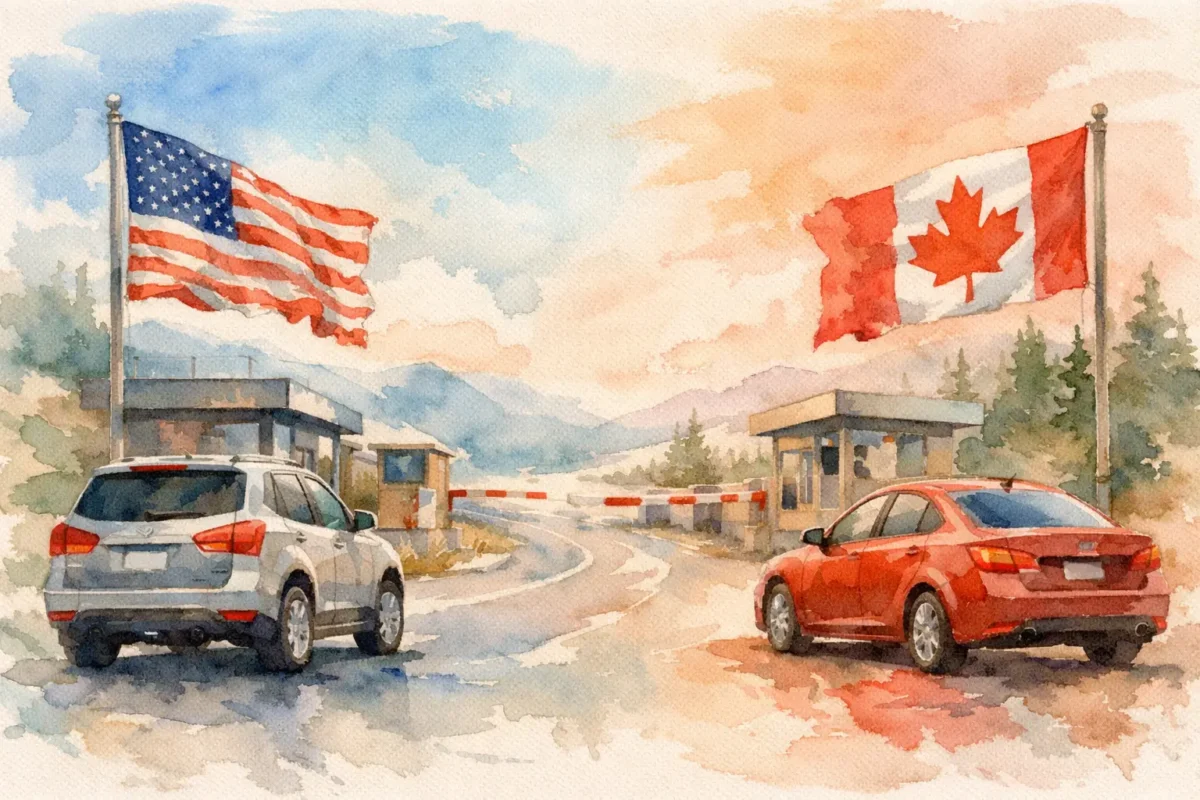
A vehicle can be perfectly legal to drive in the United States and still need additional clearance before it can be licensed in Canada. The reverse is also true. That is the central issue in RIV versus NHTSA: these are different compliance systems for different countries, and using the wrong process can delay your shipment at the border or leave you with a vehicle you cannot register.
For most passenger vehicle moves, the question is straightforward. A vehicle entering Canada from the United States usually involves the Registrar of Imported Vehicles program, commonly called RIV. A vehicle entering the United States from Canada usually involves National Highway Traffic Safety Administration, or NHTSA, requirements, along with separate EPA rules. The paperwork, eligibility tests, and timing are not interchangeable.
RIV Versus NHTSA: The Basic Difference
RIV is a Canadian vehicle-import program administered on behalf of Transport Canada. It is designed to confirm that eligible U.S.-market vehicles entering Canada can be brought into compliance with Canadian safety requirements before provincial or territorial registration.
NHTSA is a U.S. federal agency that regulates motor vehicle safety standards. When a vehicle is imported into the United States, NHTSA requirements focus on whether the vehicle complies with applicable Federal Motor Vehicle Safety Standards, or whether it qualifies for a permitted exemption or approved import path.
The easiest way to remember the difference is by direction of travel:
- Importing a U.S. vehicle into Canada generally means dealing with RIV requirements.
- Importing a Canadian vehicle into the United States generally means dealing with NHTSA and DOT requirements.
That simple distinction matters, but it does not replace customs procedures. A vehicle can meet RIV or NHTSA requirements and still require proper title handling, export filing, customs entry, duties or taxes, and release by the appropriate border authorities.
When RIV Applies to a Vehicle Entering Canada
RIV is commonly involved when a U.S.-titled passenger vehicle, pickup, SUV, motorcycle, or certain other road vehicle is permanently imported into Canada. Before purchasing or transporting the vehicle, the first step is checking whether its make, model, and model year are admissible.
Not every vehicle sold in the United States is eligible for import into Canada. Some vehicles are inadmissible because they cannot be reasonably modified to meet Canadian requirements. Others may be eligible only if they meet specific conditions. A vehicle that appears identical to a Canadian model is not automatically admissible, so always verify the exact vehicle before money changes hands.
For an eligible vehicle, the RIV process usually includes an import declaration at the Canadian border and issuance of an RIV Form 1. The importer then completes any required modifications and inspection within the required timeframe. Common items can include daytime running lights, metric speedometer markings, child restraint tether anchorage requirements, or compliance labels. Required modifications depend on the vehicle, its age, and its original market configuration.
Recall clearance is another major checkpoint. The importer generally needs proof that there are no outstanding safety recalls, or documentation showing applicable recalls have been completed. This is one of the most common sources of delay because manufacturer letters, dealer records, and vehicle history reports do not always provide the same level of acceptance.
A completed RIV inspection does not replace provincial registration requirements. The province may still require insurance, tax payment, a safety inspection, ownership documentation, and other registration documents.
What RIV Does Not Cover
RIV is not a customs broker, a transport company, or a substitute for export procedures from the United States. Before a U.S.-titled vehicle can cross northbound, U.S. Customs and Border Protection typically requires advance submission of title documentation through the proper export process. Depending on the vehicle and transaction, an AES filing may also be needed.
This is why a buyer should not treat the RIV form as the entire import plan. The vehicle must be cleared for export, transported to the correct crossing, entered into Canada correctly, and processed for RIV where applicable.
When NHTSA Applies to a Vehicle Entering the United States
A vehicle coming from Canada into the United States faces a different compliance question: does it conform to U.S. safety standards? At entry, the importer generally makes a declaration to NHTSA using the DOT HS-7 form. EPA compliance is handled separately, typically using EPA import documentation.
Many Canadian-market vehicles were built to meet both Canadian and U.S. standards. Even then, the importer should confirm the vehicle’s certification label and exact compliance status. A label stating that the vehicle conforms to all applicable U.S. Federal Motor Vehicle Safety Standards can make the process far more straightforward.
If the vehicle does not conform to U.S. standards, it may need to be imported through a Registered Importer. The Registered Importer process can involve a vehicle eligibility determination, required modifications, a bond, and proof that the vehicle has been brought into compliance before it is released for unrestricted use.
This is not a paperwork technicality. A nonconforming vehicle can be expensive to modify, difficult to certify, or impossible to import permanently through a standard path. Buyers should verify eligibility before bidding on a Canadian auction vehicle, accepting a private-sale deposit, or arranging transport to the border.
NHTSA Is Only One Part of U.S. Entry
NHTSA addresses safety compliance, but a U.S. import may also involve EPA emissions rules, Customs and Border Protection entry requirements, duty assessment, state registration rules, and manufacturer recall considerations. Commercial vehicles can introduce additional complications involving vehicle classification, weight ratings, equipment standards, and business-use documentation.
A Canadian registration alone does not prove that a vehicle is cleared for U.S. import. Likewise, a clean title does not prove compliance with NHTSA or EPA standards. These are separate checks, and all of them need to align.
Why Vehicle Type Changes the Answer
The RIV versus NHTSA comparison is clearest for late-model passenger vehicles, but the details can change quickly for specialty equipment. RVs, semi tractors, buses, trailers, heavy-duty pickups, machinery, and older collector vehicles may follow different rules based on their age, classification, intended use, and whether they are designed for highway operation.
For example, a trailer may not have the same emissions concerns as a gasoline vehicle, but it can still require proper ownership documents, admissibility review, customs entry, and compliance verification. A heavy truck may be subject to different safety and emissions standards than a passenger car. Off-road machinery may not fall under the same road-vehicle rules at all, yet still needs accurate customs classification and transport planning.
Age can also affect the analysis. Certain older vehicles may qualify for exemptions that newer vehicles do not. However, an age-based exemption does not erase customs obligations, title requirements, or state and provincial registration rules. Never assume that “classic” means “simple.”
The Most Common Cross-Border Mistakes
The costliest mistakes usually happen before the vehicle is purchased. Buyers often assume that a vehicle can cross because it is physically located close to the border, has a clean title, or looks identical to a domestic model. None of those facts confirms regulatory eligibility.
Another frequent issue is waiting too long to address U.S. title export requirements. If original title documents are not submitted with the required advance notice, the vehicle may miss its transport appointment or sit in storage while the export process is corrected.
Recall documentation can also derail a Canadian import. A seller saying that no recalls are open is not the same as having the documentation required for RIV processing. For U.S. imports, missing or unclear certification labels can create similar uncertainty around NHTSA compliance.
Finally, buyers sometimes arrange shipping first and compliance second. That approach creates pressure at the border, where there is little room to solve a missing title, an inadmissible VIN, or an unverified emissions issue.
A Better Way to Plan the Move
Start with the VIN, the title status, the vehicle’s country of manufacture, its certification labels, and its final destination. Then confirm the correct regulatory path before arranging pickup. For a northbound move, determine RIV eligibility and recall-clearance needs. For a southbound move, confirm NHTSA and EPA compliance before the vehicle leaves Canada.
Next, coordinate the border process as one operation: title export notice, AES filing when required, customs release, compliance paperwork, duty and tax planning, storage if needed, and final vehicle delivery. This is especially valuable for auction buyers and dealers, where a missed deadline can add storage, towing, and transport costs quickly.
Bidbuy Importers handles these connected steps for customers moving vehicles between the United States and Canada, including export documentation, customs processing, RIV coordination, compliance support, and vehicle transport.
The right agency is determined by where the vehicle is going, but a successful import depends on every document and deadline lining up before the truck reaches the border. Verify the vehicle first, build the compliance plan second, and move it only when the crossing is ready.