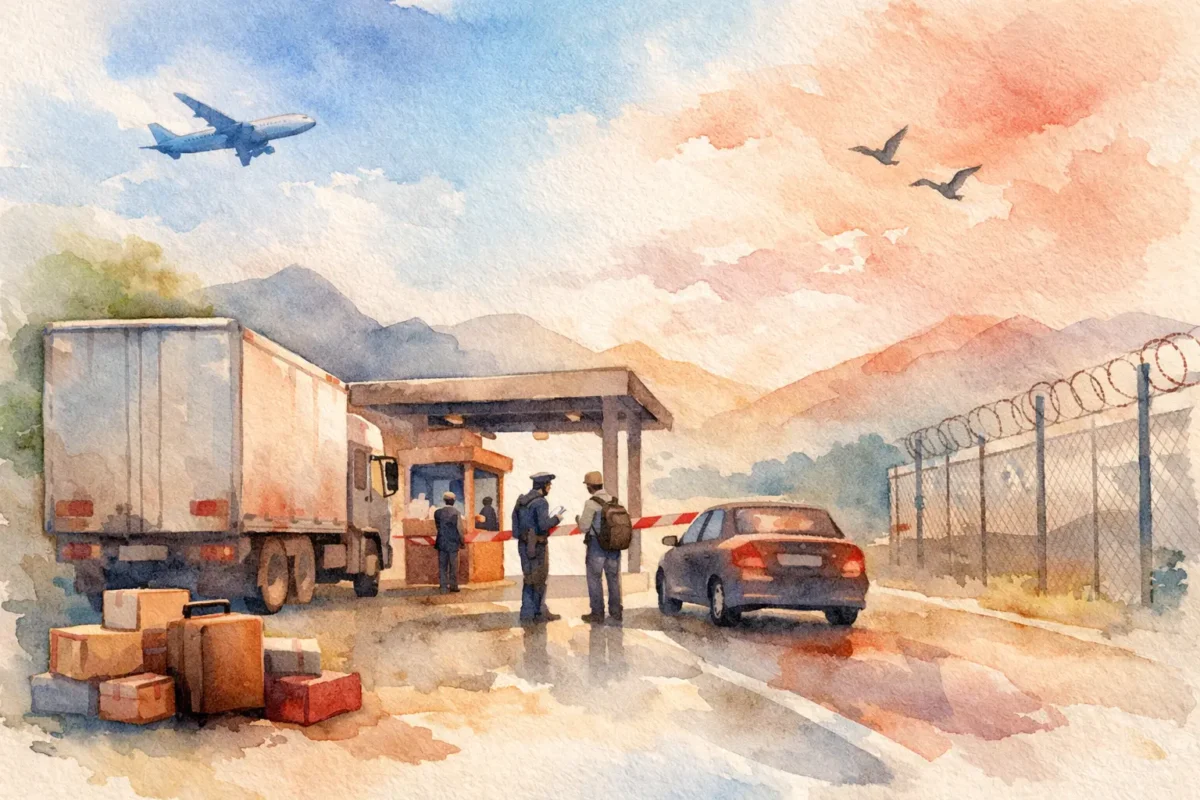
A vehicle can be loaded, insured, and scheduled for transport, then sit at the border because one document is missing, inconsistent, or submitted too late. The best ways to avoid customs delays start well before the driver reaches the port. For U.S.-Canada vehicle moves, customs clearance depends on accurate ownership records, advance filings, regulatory eligibility, and coordination between the buyer, seller, carrier, broker, and border office.
A delay is not always caused by a serious problem. A lien release that does not match the title, an unreadable VIN photo, a recall letter that names the wrong model year, or an export filing submitted after a port cutoff can stop an otherwise routine shipment. The practical goal is to build a complete, reviewable file early enough to correct issues before the vehicle is in transit.
1. Confirm the Vehicle Can Cross Before You Buy or Ship
The first customs checkpoint is eligibility. A vehicle may be legally titled and roadworthy in one country but still require additional compliance steps to enter the other. This is especially relevant for late-model vehicles, modified vehicles, gray-market imports, salvage units, heavy-duty trucks, trailers, RVs, buses, machinery, and commercial equipment.
For imports into the United States, confirm the vehicle’s eligibility under applicable DOT, NHTSA, and EPA requirements. For vehicles going into Canada, determine whether the unit is admissible, whether it requires Registrar of Imported Vehicles processing, and whether recall clearance or other supporting records will be needed. Do not assume a vehicle built in the United States or Canada is automatically simple to import. Manufacturing location, VIN details, model year, labeling, vehicle class, and modifications can all matter.
This step is particularly important for auction buyers. Auction listings may not show every label, title brand, lien, alteration, or missing-document issue. Ask for the VIN, title image, vehicle photos, and seller documents before committing to cross-border transport.
2. Make the Title Package Match Exactly
Titles are the most common reason vehicle exports slow down. Customs agencies need to see a clear chain of ownership, and every core document should agree on the VIN, owner name, vehicle description, and title status.
Review the original title, bill of sale, lien release, and any power of attorney as one package. The VIN should match character for character. A single transposed digit, a handwritten correction without proper support, or a name that differs from the purchase paperwork can trigger further review. If a lien is listed on the title, obtain a proper lien release before the vehicle reaches the border.
For private-party purchases, make sure the bill of sale clearly identifies the buyer, seller, purchase price, date of sale, VIN, year, make, and model. Dealers should also verify that reassignment sections are complete and that the title has not been signed in a way that creates a break in ownership. Open titles and incomplete assignments create unnecessary risk.
Keep the original title protected and available. A scan may be needed for advance submission, but the original is often required during the export process. Sending the original by regular mail at the last minute is a preventable scheduling problem.
3. Meet the 72-Hour U.S. Export Title Requirement
When exporting most self-propelled vehicles from the United States, the title documents generally must be submitted to U.S. Customs and Border Protection at least 72 hours before export. The requirement applies to the export process, not simply to the date the carrier picks up the vehicle.
The border port may have its own submission method, hours, cutoff times, and procedures. Some ports require electronic submission, while others may have specific instructions for original documents or particular vehicle types. A driver arriving early does not solve a late filing. In fact, bringing a vehicle to the port before export clearance is confirmed can lead to storage charges, missed carrier appointments, and a delayed delivery schedule.
Build the 72-hour window into the purchase timeline, especially around weekends and holidays. If the seller cannot release the title promptly, do not promise a next-day border crossing. The right plan depends on the port, the type of vehicle, and whether the paperwork is already complete.
4. Prepare Customs Entries and Export Filings Before Dispatch
A customs entry should never be assembled while the truck is waiting at the border. Whether a vehicle is moving into the United States or Canada, the importer and customs broker need accurate commercial information to prepare the declaration and determine applicable duties, taxes, and requirements.
Provide the VIN, purchase price, currency, buyer and seller details, country of origin when available, vehicle description, transport details, and supporting invoices early. Commercial shipments may also require additional data for export reporting, including an Automated Export System filing when applicable. A shipment description such as used car is rarely enough for a clean commercial filing. The information must match the actual transaction and transport documents.
Be honest about value and condition. Declaring a lower value to reduce taxes can create much larger problems if customs compares the entry against the bill of sale, auction records, market information, insurance documents, or payment trail. Salvage, non-running, and damaged vehicles should be described accurately as well. Proper disclosure gives the broker the information needed to classify and clear the shipment correctly.
5. Separate Compliance Documents From Ownership Documents
A complete title package does not automatically prove import compliance. Keep regulatory records organized in a separate, clearly labeled section of the file. Depending on the direction of travel and type of vehicle, that may include manufacturer labels, recall clearance letters, DOT and EPA forms, RIV documents, photographs, prior registration, and modification details.
Recall clearance is a frequent issue for Canadian imports. The letter should be current, specific to the VIN, and issued by an acceptable source. A generic statement that recalls are handled by a manufacturer is not the same as documentation confirming the status of the specific vehicle.
Commercial vehicles add another layer. Weight ratings, axle configurations, emissions equipment, safety equipment, and intended use can affect documentation needs. The process for a passenger sedan is not always the process for a semi tractor, bus, excavator, or fifth-wheel trailer. Send details early so the correct requirements can be identified before the shipment is booked.
6. Use a Border-Ready Transport Plan
A customs-approved file is only useful if the carrier has the correct instructions and arrives at the proper port. Provide the driver or dispatch team with the confirmed crossing location, reference numbers, release instructions, contact information, and any restrictions on when the shipment can present.
Avoid changing the carrier, port, or crossing date without telling the customs team. A last-minute reroute may require updated coordination and can disrupt a clearance that was prepared for another location. This matters most for multi-vehicle loads and dealer inventory, where one incomplete unit can affect the timing of the entire truck.
Plan for inspections as a normal possibility, not a failure. Customs may select a vehicle for examination based on paperwork, commodity type, random screening, or operational conditions at the port. A clean file will not eliminate every inspection, but it gives the shipment the best chance of moving forward without an avoidable document hold.
7. Do Not Leave Fees, Taxes, or Authority Questions Unresolved
Before the vehicle moves, confirm who is acting as importer of record, who is responsible for duties and taxes, and who has authority to sign or authorize filings. This is especially important when a dealer purchases for a customer, a family member buys on behalf of another person, or a company uses an employee to coordinate the shipment.
Payment readiness also matters. If duties, taxes, brokerage fees, storage charges, or transport balances are unresolved, a released vehicle can still be held from delivery. Clarify the full cost structure before pickup rather than treating border charges as an afterthought.
8. Put One Experienced Team in Charge of the File
The final safeguard is coordination. Customs delays often happen in the gaps between parties: the seller sends an incomplete title, the auction releases the vehicle before documents are ready, the transporter receives outdated instructions, or the buyer assumes someone else handled the filing.
A specialized cross-border team can review the documents, manage export notice timing, coordinate customs release and entry, address recall and compliance requirements, arrange storage if needed, and keep transport aligned with border clearance. Bidbuy Importers handles these moving parts for private buyers, dealers, auction customers, and commercial operators moving vehicles between the United States and Canada.
The best time to solve a border issue is when the vehicle is still at the seller, auction yard, or dealership. Start the document review as soon as you have the VIN and purchase details, allow time for corrections, and schedule transport only after the file is ready to move.