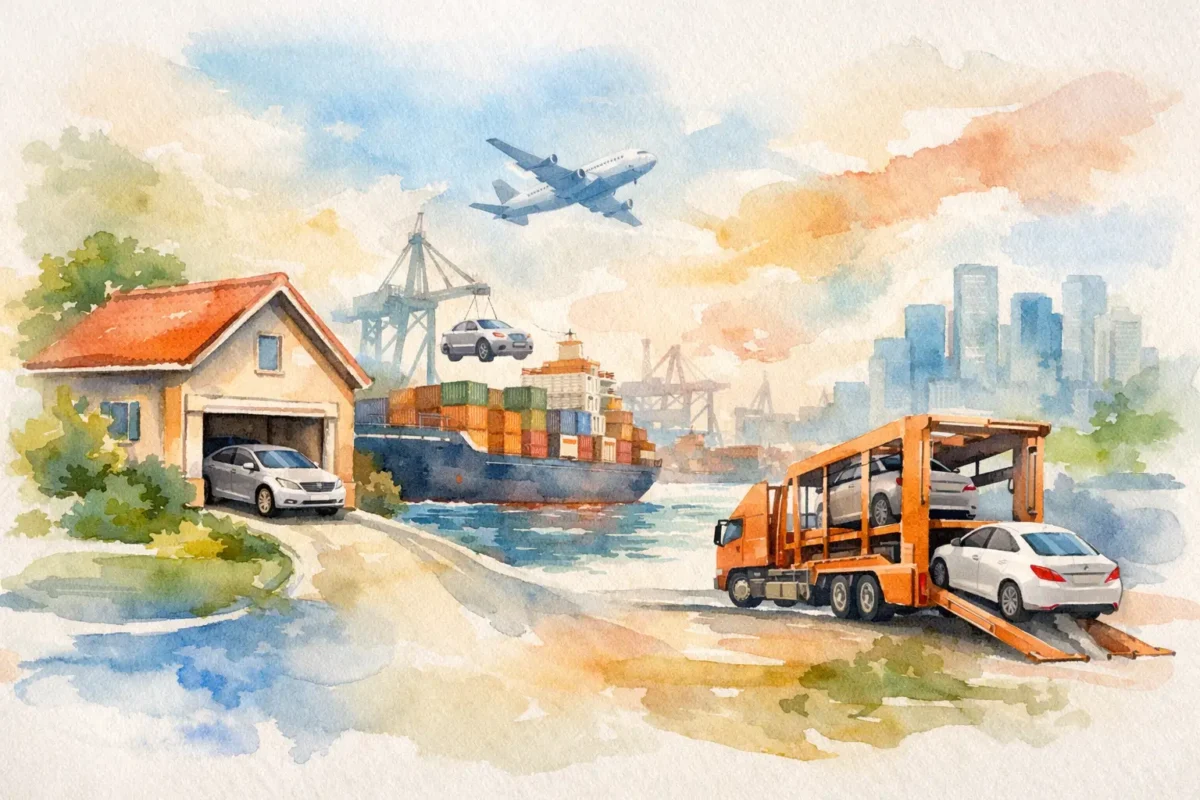
Buying a vehicle across the US-Canada border is usually the easy part. The hard part starts when the title has to be cleared for export, customs filings need to be correct, transport has to be timed around border rules, and the vehicle still needs to arrive at your driveway or dealership without delays. That is where door to door vehicle import becomes valuable. It turns a fragmented process into one managed move.
For private buyers, dealers, and commercial operators, the appeal is simple: one coordinated service handles the pickup, export, customs release, compliance steps, and final delivery. But not every shipment works the same way, and not every vehicle follows the same rules. A passenger car, a semi tractor, and an RV can all cross the same border, but the paperwork, inspections, and transport planning can look very different.
What door to door vehicle import actually includes
At its core, door to door vehicle import means the vehicle is moved from the seller’s location to the buyer’s final destination with professional handling at every stage in between. That usually includes domestic pickup, title and export review, customs documentation, border coordination, release processing, and inland transport after crossing.
What makes this different from standard auto shipping is the border component. A carrier can move a car from one state to another without dealing with export notice rules, customs entries, admissibility standards, recall documentation, or federal agency requirements. Cross-border movement adds those layers, and missing one can stop the shipment cold.
A true door-to-door service is not just transportation with a customs form added on top. It is logistics and compliance managed together. That matters because timing is connected. If export paperwork is not filed correctly, the truck cannot cross when scheduled. If the vehicle is not admissible or required documents are missing, customs clearance can stall even if transport is already booked.
Why people choose door to door vehicle import
Most customers are trying to avoid handoffs. They do not want to hire one company to pick up the vehicle, another to file export documents, another to manage customs, and another to deliver it after release. That model can work, but it increases the chance of miscommunication and extra storage charges.
Door to door vehicle import also helps when the seller is in a different region than the border crossing that makes the most sense. A vehicle bought at auction in the Midwest may need to be picked up quickly, staged properly, then moved toward a specific crossing based on title availability, customs timing, and destination. Coordinating that path is where experience pays off.
For first-time importers, the biggest benefit is clarity. For high-volume dealers, it is efficiency. For commercial equipment buyers, it is risk control. The value changes by customer, but the reason is the same: fewer moving parts for the buyer to manage.
The steps behind a door-to-door import move
Every shipment starts with the basics: what the vehicle is, where it is located, where it is going, and whether it can legally enter the destination country. That sounds obvious, but it is where many problems begin. Buyers sometimes arrange transport before confirming admissibility, title status, or whether the seller can produce the right documents.
Once the shipment is reviewed, the export side has to be handled correctly. On US exports, title documentation and prior notice rules are a major checkpoint. If the title is inaccurate, missing, or submitted late, the vehicle may not be cleared to leave. That can affect the border date, transport schedule, and storage timeline.
After export comes customs entry and release in the destination country. For Canada-bound vehicles, that can involve RIV processing, recall clearance support, and compliance steps tied to federal import requirements. For US-bound vehicles, there may be DOT, NHTSA, EPA, and other import standards to address depending on the vehicle type and age.
Then comes final delivery. Once the vehicle is released, it still has to reach the customer. That may mean open or enclosed transport for a collector vehicle, flatbed movement for an inoperable unit, or specialized hauling for heavy trucks, trailers, or equipment. The last mile is not an afterthought. It is part of the total import plan.
Where delays usually happen
Most border delays are not random. They come from preventable issues.
Titles are a common problem. If the seller’s title is not available, not signed properly, or does not match the vehicle information, export cannot move forward as planned. Auction vehicles can create another issue when release documents or title processing are still pending.
Recall clearance and compliance paperwork can also slow things down, especially for buyers who assume every vehicle can be imported without restrictions. Some can. Some cannot. Some need modifications or additional review. The answer depends on the vehicle, model year, and destination country.
Transport timing is another factor. Carriers work on schedules, but border processing does not always move at carrier speed. If customs is not ready when the truck arrives, wait times and rescheduling costs can follow. That is why door-to-door service works best when the logistics team and the compliance team are aligned from the start.
Not all vehicles fit the same process
This is where a lot of online advice falls short. It tends to describe the import of a standard passenger car and treat that as the rule for everything else.
A daily-driver sedan purchased from a private seller is one thing. A motorhome is another. A semi tractor, a trailer, or a piece of machinery may need a different carrier, different customs treatment, and different delivery planning. Dimensions, weight, condition, and vehicle class all affect the move.
Commercial buyers should pay close attention here. Heavy-duty units often involve more than routine shipping. They may require specialized loading, port or yard storage, secure document handling, and close coordination around entry filings. A provider that understands both transport and customs can save time simply by spotting issues before dispatch.
What to ask before booking a service
If you are comparing providers, ask who is handling the customs side and who is handling the transportation side. If those are separate companies, ask who is responsible when documents are late or a border appointment is missed.
You should also ask whether the quote includes pickup, export filing support, customs clearance, compliance coordination, and final delivery, or whether some of those items are billed separately. Low quotes can look attractive until storage, document correction, or rebooking fees start appearing.
It also helps to confirm whether the company has experience with your exact type of unit. Importing a pickup truck, shipping an exotic car in an enclosed trailer, and moving a commercial bus across the border are not interchangeable services.
When door-to-door is worth it and when it may not be
For most customers, door-to-door service is worth it because the border process is unforgiving. A mistake in paperwork can cost more than the service fee you were trying to avoid. That is especially true when the vehicle has already been paid for and is sitting at auction, in storage, or at a seller’s location waiting to move.
That said, there are cases where a customer may only need part of the service. A dealer with its own transport network may only want customs and export support. A buyer near the border may choose terminal pickup instead of residential delivery. The right setup depends on budget, distance, vehicle type, and how much of the process you want to manage yourself.
What matters most is knowing what is included and who is accountable from start to finish. That is the difference between a simple shipment and a complicated one.
A reliable door-to-door vehicle import service should make the process feel organized, not mysterious. If the provider can explain the paperwork, set realistic timing, and coordinate the move from the seller’s door to your final destination, you are far less likely to face expensive surprises. For customers moving vehicles between the US and Canada, that kind of hands-on execution is exactly what keeps a good purchase from turning into a border problem.