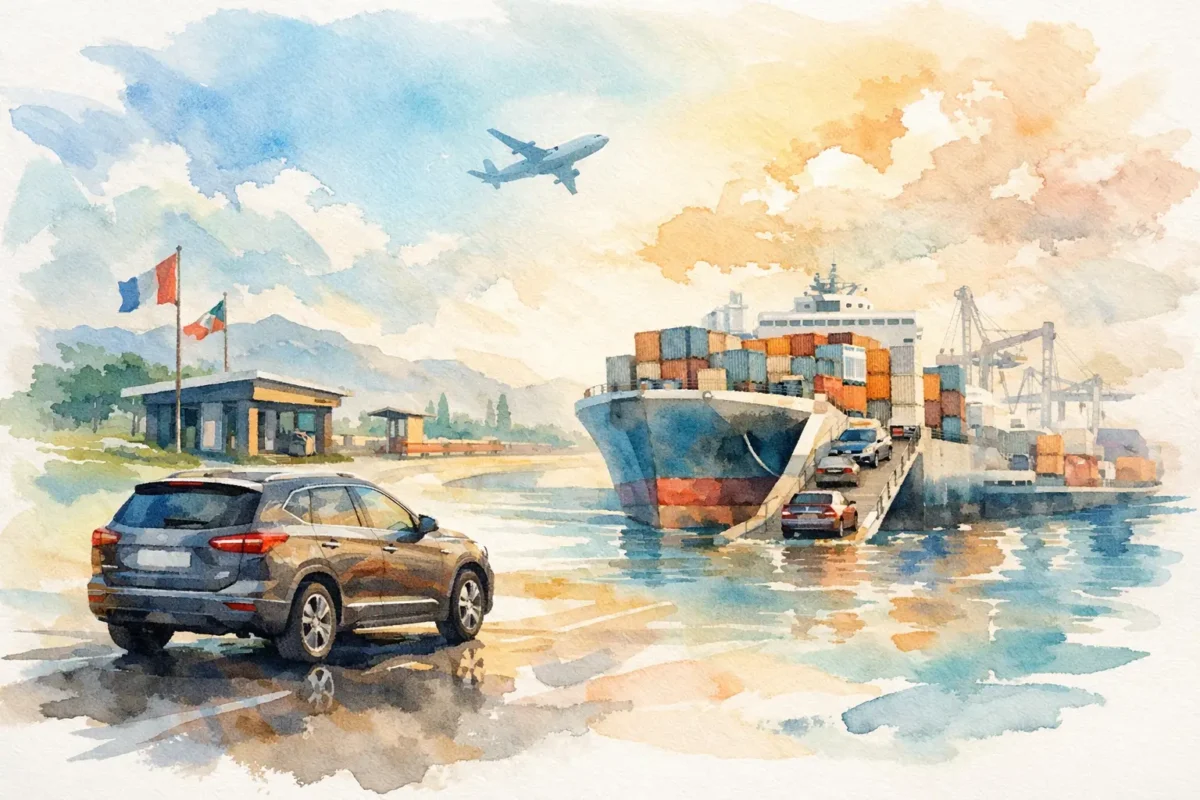
A vehicle can be bought in ten minutes and delayed at the border for ten days. That is usually how people learn the cross border car shipping process is not just about booking a truck. It is a chain of compliance, timing, paperwork, customs coordination, and transport planning. If one piece is missing – a title issue, a late filing, an unresolved recall, the wrong carrier setup – the whole move can stall.
For buyers, sellers, dealers, and commercial operators moving vehicles between the United States and Canada, the real question is not whether shipping is possible. It is whether the shipment is prepared correctly before the vehicle ever gets near the border. That is what keeps costs under control and avoids preventable holds.
What the cross border car shipping process actually involves
The cross border car shipping process starts long before pickup. First, the vehicle and ownership documents must be reviewed to confirm the unit can legally export from one country and import into the other. After that, the correct customs and regulatory filings must be prepared, border timing must be scheduled, and transportation has to be matched to the vehicle type, value, and destination.
This is where many shipments split into two very different outcomes. A properly prepared move tends to feel straightforward because the difficult work happens in advance. A rushed move often looks easy at first, right up until customs asks for a document that was never filed or the carrier arrives before export clearance is ready.
For a standard passenger vehicle, the process may be relatively clean if the title is available, the VIN paperwork matches, and the vehicle meets the receiving country requirements. For auction purchases, salvage vehicles, heavy trucks, RVs, or specialty units, there are usually more checkpoints. The right process depends on the unit, the direction of travel, and the documents available.
Step 1: Confirm the vehicle is eligible and the paperwork is usable
Before transport is scheduled, the first job is document review. This includes the title or ownership record, bill of sale, VIN, seller information, and in many cases recall or compliance documentation. If the names do not match, the title is not negotiable, or there is a lien that has not been properly released, the shipment can stop before it starts.
For exports from the US, title handling is a major checkpoint. Border agencies expect proper title submission ahead of export. If that filing window is missed, the vehicle may not be allowed to leave when the carrier shows up. That creates storage costs, rescheduling charges, and frustration that could have been avoided with better timing.
For imports into Canada or the US, admissibility matters just as much as ownership. Some vehicles need compliance support related to DOT, NHTSA, EPA, or Canadian import rules. Some need recall clearance. Others may require extra review because of age, modification, vehicle class, or prior damage history. It depends on what the vehicle is and where it is going.
Step 2: Prepare the export filing and customs entry
This is the part that people often underestimate. Moving a vehicle across the border is not the same as domestic auto transport. Customs procedures are built into the shipment itself.
If a vehicle is leaving the United States, export requirements typically include advance title submission and, when applicable, AES filing. Those details have to be accurate. VIN errors, inconsistent seller names, or missing supporting documents can delay release.
On the import side, customs entry must match the actual transaction and vehicle details. That can include valuation, classification, declarations, and supporting compliance paperwork. When the paperwork is prepared correctly, customs processing is usually predictable. When it is pieced together at the last minute, it becomes unpredictable fast.
This is why many buyers and dealers prefer one provider to manage both brokerage and transport coordination. It reduces handoff errors. The carrier, customs team, and customer are working from the same timeline instead of trying to fix a filing issue while a truck is already en route.
Step 3: Choose the right transport setup
Not every vehicle should move the same way. The cross border car shipping process for a daily-driver sedan is different from the process for a lifted pickup, a non-running auction car, a bus, or a semi tractor.
Open transport is common for standard vehicles where cost control matters most. Enclosed transport makes more sense for high-value, specialty, collector, or weather-sensitive units. Non-running vehicles may need winch capability or special loading arrangements. Oversized units may require route planning, permits, or equipment that cannot be booked like a routine car haul.
There is also a timing issue. Some customers want pickup immediately after purchase, but immediate pickup is not always the smartest move. If export or customs documents are not ready, moving the vehicle too soon can create storage or layover costs at the wrong point in the trip. In many cases, the best plan is not the fastest pickup. It is the pickup that matches clearance readiness.
Step 4: Coordinate border release and inspection requirements
Once the vehicle is in motion, border coordination becomes the critical stage. Customs officers may review the title, export record, import entry, vehicle identity, and supporting declarations. Depending on the shipment, there may also be agency-specific requirements tied to safety, emissions, or import eligibility.
This part matters because border release is not just a physical crossing. It is a legal transfer through a regulated checkpoint. If the file is complete, release can move efficiently. If something is missing, the vehicle can be held until the issue is corrected.
Customers are often surprised that a simple mismatch can trigger delay. A VIN transposed on one form, a title image that is not legible, or an incorrect year model entry can cause questions. That is why experienced review before submission matters. It is less expensive to catch mistakes at a desk than at a border inspection point.
Step 5: Complete the receiving-country requirements
Crossing the border is not always the last step. Once the vehicle enters the receiving country, there may still be post-entry requirements to finish. For Canada, that can include RIV processing and follow-up compliance steps depending on the vehicle. For the US, imported vehicles may need additional attention to DOT, EPA, and admissibility requirements before the process is fully complete.
This is especially relevant for customers who assume customs release and road readiness are the same thing. They are not always the same. A vehicle may be allowed entry, but still need final processing before it is ready for registration or normal use. That distinction matters for planning delivery dates and customer expectations.
Where delays usually happen
Most delays come from a short list of avoidable problems. Titles are submitted late. The seller sends incomplete documents. A buyer books shipping before confirming import eligibility. The carrier is not informed the vehicle is inoperable. Customs filings are based on assumptions instead of verified paperwork.
Auction vehicles create another common issue. Buyers often move quickly after winning a bid, but auction paperwork can lag behind the sale date. If transport is booked before the release documents are actually available, the shipment timeline becomes guesswork.
Commercial units also have their own complications. Trucks, trailers, buses, RVs, and machinery often involve different measurements, transport equipment, and import classifications. The more specialized the unit, the less room there is for generic handling.
Why professional coordination matters
The reason customers hire a specialist is simple. The job is not just transportation. It is compliance plus transportation, with timing controlling both.
A provider that understands title submission, AES, customs release, recall clearance, RIV handling, vehicle admissibility, and final delivery can prevent the kind of mistakes that cost real money. That matters to private buyers trying to get one car home, and it matters even more to dealers or fleet operators moving multiple units on a schedule.
Bidbuy Importers is built around that full-process approach. Instead of treating border clearance and vehicle transport as separate problems, the work is managed as one connected operation. That is usually the difference between a shipment that moves with a plan and one that moves with crossed fingers.
What customers should do before booking
Before you schedule a cross-border move, gather the title or ownership papers, confirm the seller information, verify the VIN on every document, and ask whether the vehicle has any compliance or recall issues that could affect import. If it is an auction purchase, confirm when the auction will release paperwork, not just when payment clears. If it is oversized, modified, or not running, disclose that early.
Good shipping starts with accurate facts. The more complete the file is at the beginning, the more predictable the shipment becomes.
A border move does not have to be stressful, but it does need to be handled in the right order. When paperwork, customs, and transport are coordinated from the start, the process becomes a controlled operation instead of a last-minute scramble.