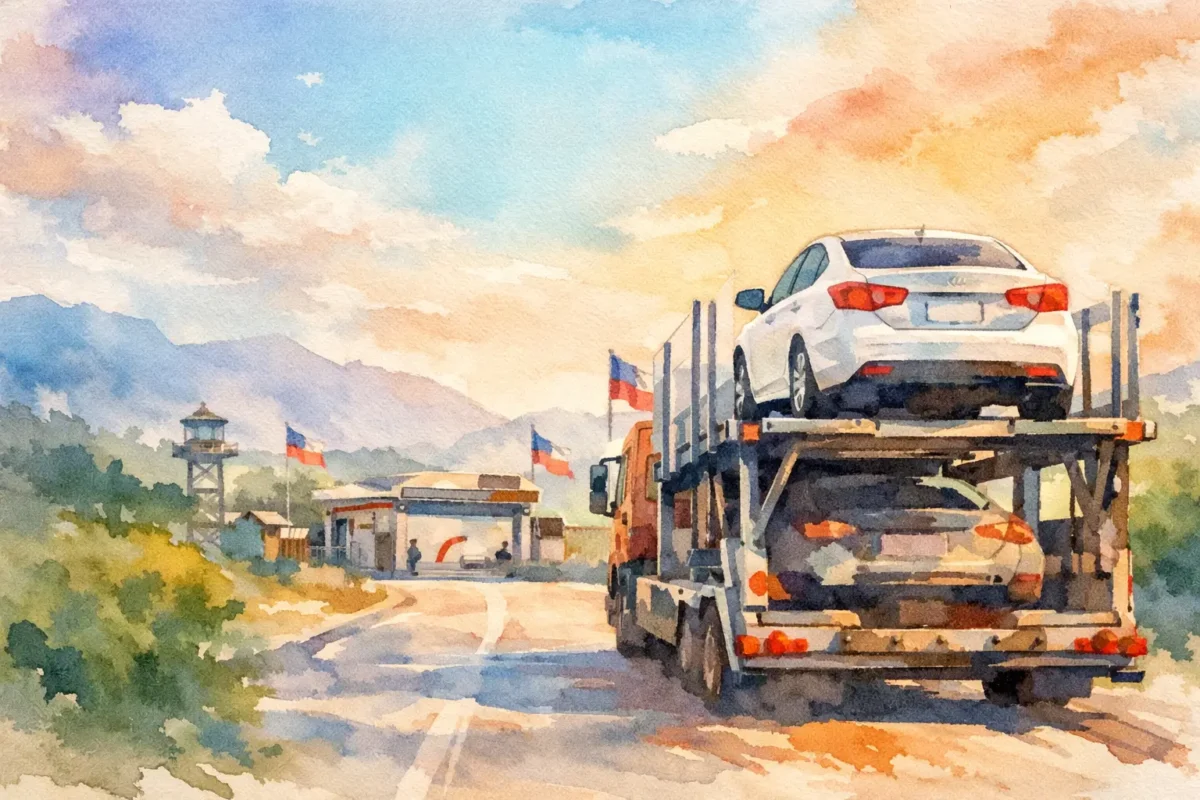
A winning auction bid is only the beginning. Auction car border delivery can involve release deadlines, original title handling, export notice, customs entry, regulatory review, and transport scheduling – often before the auction yard starts charging storage. A vehicle may look ready to move the moment payment clears, but it cannot cross the US-Canada border until the paperwork and timing are in order.
For private buyers and dealers, the goal is simple: get the vehicle released, cleared, and delivered without avoidable fees or border delays. The way to do that is to treat auction pickup, compliance, customs, and transportation as one coordinated process rather than separate tasks.
What Auction Car Border Delivery Really Includes
Border delivery is not simply arranging a truck from an auction yard to a destination in another country. The carrier needs a vehicle that is legally available for pickup, while the customs and export process needs accurate ownership documents and vehicle details. If one piece is missing, the truck may be ready but unable to load, or the vehicle may reach the border without authorization to proceed.
The process usually begins with confirming the auction release requirements. Copart, IAA, dealer auctions, specialty auctions, and online marketplaces can each have different rules for payment confirmation, gate passes, title release, pickup appointments, and storage periods. Some vehicles have a clean title available immediately. Others may have a delayed title, a salvage document, a bill of sale, or paperwork still being processed by the selling jurisdiction.
That distinction matters. Original ownership documents are central to cross-border movement, especially when a vehicle is exported from the United States. A vehicle should not be dispatched toward the border based on assumptions about when the title will arrive.
The Auction Release Comes First
Before transport is booked, confirm that the auction has cleared the buyer for release and identify exactly which documents will be provided. Ask whether the title is in hand, whether it is signed correctly, and whether the auction will release it directly to the buyer, transporter, or an authorized representative.
A common problem occurs when a buyer assumes the auction yard will hand over the title with the vehicle. In many cases, the vehicle can be picked up while the title is sent separately, or the title may not be available until a later date. That may be workable for domestic transportation, but it can stop a cross-border move.
Storage costs are another pressure point. Auction facilities generally do not hold vehicles indefinitely, and fees can accumulate quickly after the free pickup window ends. Moving the vehicle to secure storage may be the better option when title processing, export filing, or compliance review will take longer than expected.
US-to-Canada Delivery: Compliance Before the Border
When a US auction vehicle is headed to Canada, the buyer must consider Canadian admissibility before arranging final delivery. Not every vehicle sold at a US auction can be registered in Canada, even if it is physically capable of crossing the border.
For many passenger vehicles, the import process includes verifying eligibility under the Registrar of Imported Vehicles program, confirming recall clearance, reviewing labeling and safety requirements, and preparing the appropriate import documentation. The age, make, model, title brand, and vehicle type can all affect the process.
Salvage and rebuilt vehicles deserve special attention. Provincial registration rules can vary, and a branded title may trigger additional inspections or restrictions. Buyers should confirm the vehicle’s eligibility and intended registration path before paying for long-distance transport. A low auction price does not remain a bargain if the vehicle cannot be registered where it will be used.
Commercial units require an even more detailed review. Trucks, semi tractors, trailers, RVs, buses, machinery, and other specialty equipment may fall under rules that differ from standard passenger-car imports. Weight rating, emissions status, safety equipment, vehicle age, and intended use can change what documentation is required.
Canada-to-US Auction Vehicle Delivery
Vehicles moving from Canada into the United States face a different set of requirements. Importers may need support with NHTSA and DOT standards, EPA requirements, customs entry, and documentation that establishes the vehicle’s admissibility. Some vehicles are eligible as built, while others may require work through a registered importer or may not be practical to import at all.
The title and ownership trail still matter. US Customs and Border Protection needs accurate information, and any lien or ownership discrepancy can create a serious delay. Canadian registration documents, bills of sale, auction records, and release documents must match the vehicle identification number exactly.
Buyers should also understand that a vehicle’s condition can affect transport planning. A non-running auction vehicle may require a winch-equipped carrier. A damaged unit may need special loading clearance. An oversized RV, truck, or piece of equipment may require permits, route planning, or specialized equipment. These details should be identified before dispatch, not when the driver arrives at the auction gate.
The 72-Hour Rule Can Control Your Schedule
For many US exports to Canada, the original title must be submitted to the US port of export at least 72 hours before the vehicle crosses. This is one of the most important timing requirements in auction car border delivery.
The 72-hour period is not a suggestion and should not be confused with the time it takes for a carrier to reach the border. If a buyer receives the title on Thursday and expects the vehicle to cross on Friday, the schedule may not be possible. Weekends, holidays, port procedures, document corrections, and courier transit can all add time.
The correct port also matters. Title submission and export processing must be coordinated with the port through which the vehicle will actually leave the United States. Sending documents to the wrong location or changing the border crossing after documents have been submitted can create additional work and delay.
Experienced cross-border coordinators plan backward from the required delivery date. They determine the intended border crossing, verify title availability, submit export documents on time, prepare customs paperwork, and only then lock in the most appropriate transport schedule.
Why the Cheapest Carrier Is Not Always the Best Choice
Price matters, especially after auction fees, taxes, repairs, and storage charges. But a carrier quote that does not account for auction pickup rules, title timing, border documentation, or the vehicle’s condition can become expensive quickly.
A domestic transporter may be excellent at moving cars between states but may not be equipped to handle customs coordination or a border handoff. In some cases, the best solution is a staged move: the vehicle is collected from the auction, stored near the border while documents are completed, then transferred to the appropriate cross-border carrier. In other cases, a single coordinated transport plan is more efficient.
The right option depends on the vehicle, the auction location, the destination, document readiness, and how quickly the buyer needs delivery. A clean-title running sedan from a major auction yard is very different from a non-running salvage SUV, a collector vehicle with a delayed title, or a commercial truck requiring specialized handling.
Information to Confirm Before You Bid
The most reliable delivery plans begin before the auction closes. Confirm the vehicle identification number, title brand, title location, auction pickup deadline, running condition, keys, dimensions, and destination. If the vehicle is crossing the border, also confirm whether it is eligible for import and what compliance or recall documentation will be needed.
For dealers buying regularly, this review should become part of the buying workflow. A consistent checklist protects margins by identifying vehicles that will require extra transport equipment, extended storage, specialized customs work, or additional compliance steps. It also prevents the costly mistake of buying a vehicle that cannot be imported or registered as planned.
Private buyers benefit from the same approach. Auction listings can be brief, and photos do not explain title timing, export requirements, or border eligibility. Asking the right questions before bidding is far easier than trying to solve a document problem after storage fees begin.
One Team for Documents, Customs, and Transport
Cross-border auction vehicles move best when one experienced team manages the handoffs. Bidbuy Importers coordinates auction releases, title and export preparation, customs clearance, compliance support, storage, and vehicle transportation for buyers moving vehicles between the United States and Canada.
That coordination reduces the risk of duplicated work and missed timing. It also gives buyers one point of contact when an auction title is delayed, a carrier needs a revised pickup appointment, or a border requirement changes the planned route.
A successful auction purchase should not turn into a storage bill or a vehicle waiting at the wrong side of the border. Before you bid, verify the paperwork, plan the crossing, and arrange delivery with professionals who understand what must happen before the truck starts rolling.