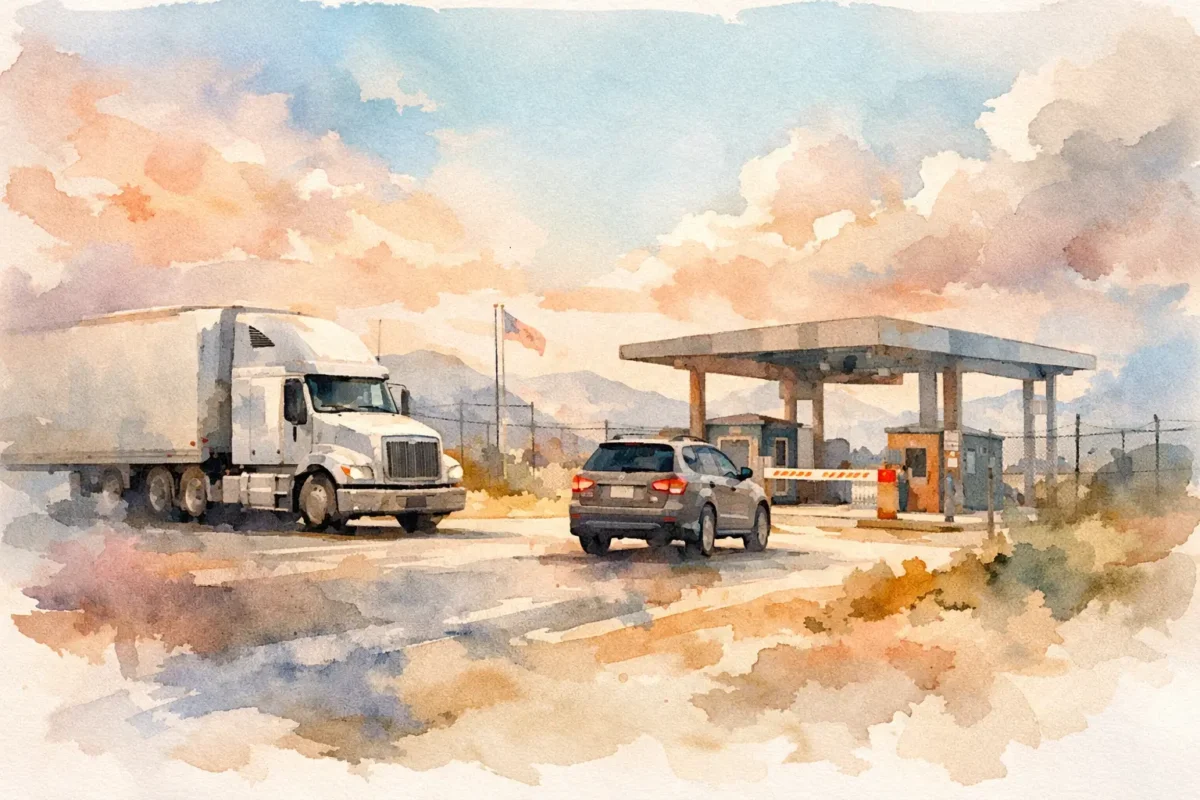
A vehicle can be loaded, insured, and ready for pickup, then still miss its border crossing because a title was submitted late, a recall letter is missing, or the importer has not completed the required entry paperwork. Customs brokerage vehicles services exist to prevent that outcome. They coordinate the documents, government filings, compliance checks, customs release, and transportation details required to move a vehicle legally between the United States and Canada.
For a private buyer, that may mean getting a newly purchased car home without a surprise at the border. For a dealer, it means keeping auction purchases and inventory moving on a predictable schedule. For commercial operators, it can mean clearing a semi tractor, RV, bus, trailer, or piece of equipment without creating an expensive delay. The right process depends on the vehicle, its direction of travel, its age, its origin, and who is importing it.
What Customs Brokerage Vehicles Services Actually Handle
Customs brokerage is often confused with vehicle shipping. Shipping moves the vehicle. Brokerage prepares the entry, communicates with the appropriate customs authorities, and helps ensure the shipment is eligible to cross. Those jobs need to work together, but they are not interchangeable.
A vehicle-focused customs broker reviews the transaction before the truck reaches the border. That typically includes the title or ownership record, bill of sale, vehicle identification number, buyer and seller information, and the planned port of crossing. Depending on the move, the broker may also coordinate recall clearance, manufacturer documentation, export filing requirements, duty and tax information, and safety or environmental compliance records.
For U.S. imports, a broker helps organize the information needed for Customs and Border Protection entry as well as the applicable Department of Transportation, National Highway Traffic Safety Administration, and Environmental Protection Agency requirements. Not every vehicle follows the same route. A newer Canadian-market vehicle, a classic vehicle, an off-road machine, and a heavy-duty truck can have very different requirements.
For vehicles entering Canada, the process can involve Canada Border Services Agency clearance, tax and duty considerations, admissibility review, and Registrar of Imported Vehicles processing for eligible vehicles. A U.S.-spec passenger vehicle may be a straightforward import if its documentation is in order. Other units may require additional evidence, modifications, or a different compliance path. Assuming every vehicle is admissible because it can physically cross the border is a costly mistake.
The Export Step Is Where Many Moves Go Wrong
When a titled vehicle is exported from the United States, the export process usually starts before the vehicle arrives at the border. U.S. Customs requires advance title submission for many self-propelled vehicles being permanently exported. The common requirement is 72 hours of prior notice, but the correct procedure and submission method can vary by port and vehicle type.
That timing matters. A carrier cannot simply arrive with a vehicle and expect the export side to be handled at the gate. If the title has not been submitted correctly, the vehicle may be held until the required notice period has passed. That can affect carrier schedules, storage costs, auction release deadlines, and the buyer’s delivery plans.
Electronic export information may also be required through the Automated Export System. This filing is not just a formality. It identifies the shipment for export reporting purposes and must match the vehicle and transaction details. Incorrect VINs, values, parties, or destination information can create avoidable complications.
Original title handling deserves special attention. Some exports require the original title, while electronic titles, lien releases, duplicate titles, salvage branding, and dealer paperwork can change what is needed. Do not wait until transport is booked to confirm title status. A clean-looking copy of a title is not always enough to support export clearance.
Compliance Is More Than a Customs Question
Customs release does not automatically mean a vehicle is ready to register and operate. Import compliance is a separate layer of the process, particularly for vehicles crossing into the United States.
A vehicle imported permanently into the U.S. generally must meet applicable federal safety and emissions standards unless a valid exemption applies. The vehicle’s certification labels, model year, country of manufacture, condition, and intended use all matter. Some nonconforming vehicles may need to be imported through a Registered Importer and brought into compliance. Others may qualify for an exemption based on age, use, or another specific rule. Some cannot be imported for road use at all.
Canada has its own admissibility and inspection framework. Recall clearance is a frequent requirement for eligible passenger vehicle imports, and an importer’s responsibilities may continue after border release through RIV processing and inspection. Commercial vehicles, trailers, machinery, and specialty equipment may not follow the exact passenger-car process, which is why generic advice can lead buyers in the wrong direction.
The practical rule is simple: confirm eligibility before paying for the vehicle whenever possible. A bargain vehicle becomes far less attractive if it cannot be registered in the destination country, requires unexpected modifications, or cannot clear under the intended import method.
Documents That Should Be Checked Before Pickup
The exact file depends on the transaction, but a professional review should happen before a carrier is dispatched. The core documents commonly include the title or proof of ownership, a signed bill of sale, photo identification for the importer, and accurate VIN details.
For dealer, auction, or business purchases, assignments, purchase records, dealer licenses, or commercial invoices may also be relevant. Lien releases must be complete and consistent with the title record. If the vehicle was purchased through an online auction, verify that the auction can release the original title on the timeline needed for export.
Additional documents may be needed for the intended border process, including manufacturer labels, recall letters, compliance forms, power of attorney for customs representation, and carrier details. A broker should compare all of these records against the actual vehicle. A single transposed VIN digit can stop a shipment that is otherwise ready to go.
Why Transport Coordination Matters at the Border
A customs entry is only one part of a successful move. The carrier needs the right pickup authorization, the right crossing instructions, accurate paperwork, and a schedule that respects export notice requirements. The vehicle may also need secure storage if the title, release, or compliance file is not ready when it reaches the border region.
This becomes more complex with oversized or non-running units. A semi tractor, bus, RV, construction machine, or trailer may require specialized equipment, permits, loading arrangements, and a carrier that understands the port process. The cheapest transport quote is not always the lowest-cost choice if the carrier cannot accommodate a border delay or lacks experience with the required paperwork.
Door-to-door coordination is particularly valuable for buyers who purchase far from the border. Instead of trying to manage a seller, auction yard, transporter, customs broker, and destination delivery separately, the move can be planned as one operation. Bidbuy Importers handles this type of coordination for passenger vehicles and commercial equipment, from document preparation through border clearance, storage when needed, and final transport.
Choosing a Broker for Cross-Border Vehicles
A general customs provider may be capable of filing an entry, but vehicle imports have details that deserve specialized attention. Ask whether the provider regularly handles both U.S. and Canadian vehicle moves, understands title export procedures, and can identify compliance concerns before the unit is picked up.
You should also know who is responsible for each part of the transaction. Clarify whether brokerage fees include entry preparation, export filings, title submission, recall clearance coordination, RIV assistance, storage, and transport scheduling. Duties, taxes, inspection costs, modifications, and government fees may be separate, so a clear estimate should distinguish service fees from third-party charges.
Experience matters most when the transaction is not routine. Salvage vehicles, non-running auction units, vintage imports, vehicles with liens, heavy equipment, and commercial trucks all require closer review. A reliable broker will explain what is known, what still needs verification, and where the risk sits. No professional should promise clearance before reviewing the relevant documents and vehicle details.
Start the Border Plan Before You Buy
The best time to involve a customs brokerage specialist is before money changes hands, not after the vehicle is sitting at an auction yard or on a carrier. Provide the VIN, year, make, model, country of manufacture when known, title status, pickup location, destination, and whether the vehicle will be permanently imported or temporarily moved.
That early review gives you time to resolve title issues, check admissibility, estimate applicable taxes and fees, and schedule transport around required export notice. It also gives you a realistic answer when the correct answer is, “it depends.” Cross-border vehicle moves are manageable, but only when the paperwork, compliance path, and logistics plan are built around the specific vehicle.
Before booking transport, have the entire file reviewed and the border process mapped out. That one step protects your vehicle, your timeline, and the investment you made to buy it.