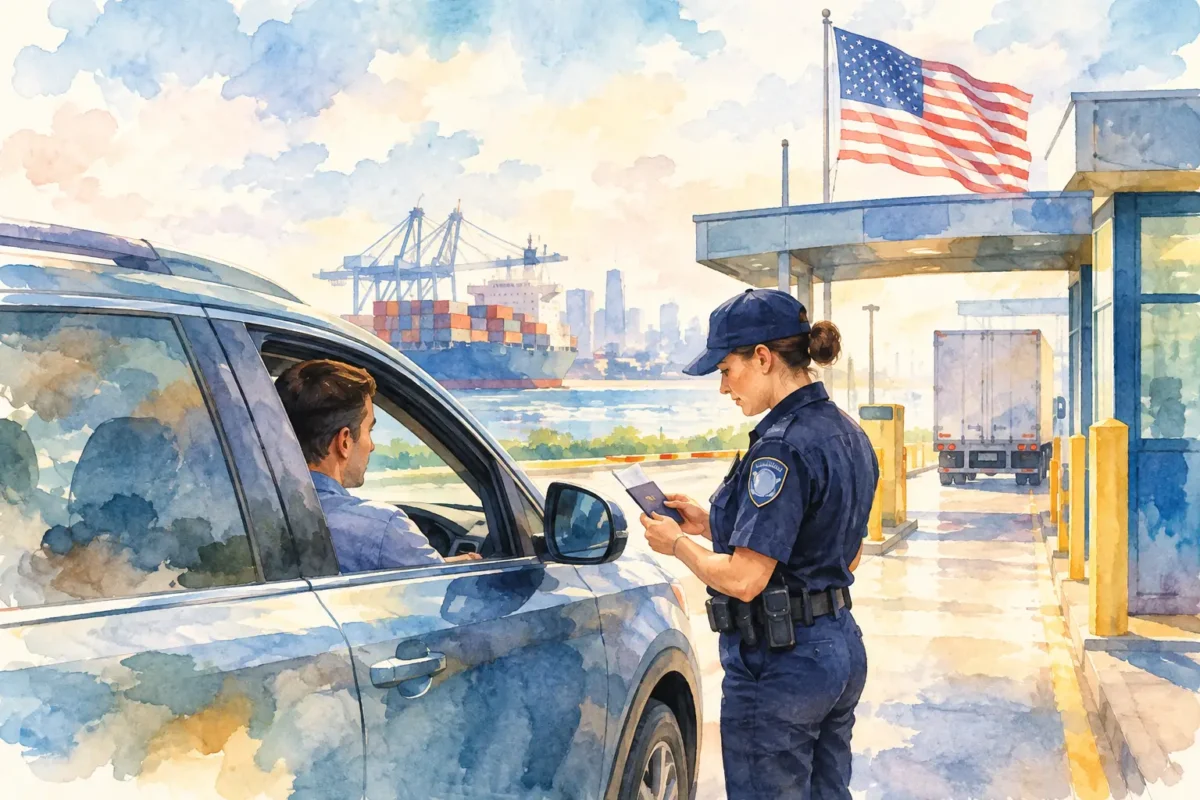
A vehicle can be sitting at the border with a signed title, a paid invoice, and a driver ready to move – and still be unable to enter the United States. This US customs vehicle entry guide explains what Customs and Border Protection reviews, which federal agencies may be involved, and how to prepare before the vehicle reaches the port.
For private buyers, dealers, auction purchasers, and commercial operators, the key is treating customs entry as a compliance process, not simply a border crossing. The paperwork, vehicle eligibility, ownership trail, and timing must all line up.
What Determines Whether a Vehicle Can Enter the United States?
U.S. Customs and Border Protection, commonly called CBP, controls the import entry process. But CBP is not the only authority involved. Imported road vehicles may also need to meet requirements administered by the National Highway Traffic Safety Administration, the Department of Transportation, and the Environmental Protection Agency.
The first question is whether the vehicle was originally manufactured and certified for U.S. use. A vehicle with a manufacturer label stating that it conforms to applicable U.S. Federal Motor Vehicle Safety Standards is usually more straightforward than a foreign-market vehicle. That does not eliminate the need for proper entry documents, but it can greatly reduce compliance complications.
A Canadian vehicle is not automatically eligible just because it looks identical to a U.S. model. Model year, certification labels, emissions configuration, recall status, and equipment can all matter. The same caution applies to vehicles purchased in Europe, Japan, Mexico, or elsewhere.
Age changes the analysis. Vehicles that are at least 25 years old may qualify for an NHTSA safety exemption, while EPA rules have their own age-based exemption threshold. These exemptions can make older collector vehicles importable, but they do not excuse title, ownership, customs, or duty requirements.
US Customs Vehicle Entry Guide: Documents to Prepare
Start gathering documents as soon as the vehicle is purchased. Waiting until transport is booked is one of the most common causes of missed border appointments and storage charges.
For most permanent vehicle imports, the core file includes:
- The original title or acceptable ownership document, properly signed and free of unresolved ownership issues
- A bill of sale or purchase invoice showing the buyer, seller, vehicle identification number, purchase price, and currency
- Government-issued identification for the importer and, where applicable, business import details
- The vehicle identification number, manufacturer label photos, and supporting specifications when eligibility must be confirmed
- EPA Form 3520-1 and DOT or NHTSA Form HS-7, completed using the correct importation code
- Recall clearance or manufacturer documentation when required for the vehicle and entry type
- Customs entry paperwork, including the information needed to prepare CBP entry and calculate duty and fees
The title deserves special attention. A title with a lien, an improper signature, a missing assignment, or a mismatch between the seller and the titleholder can stop the process. Auction paperwork can also require extra review, especially when a vehicle is sold with a salvage, rebuilt, parts-only, or branded title.
Commercial units such as semi tractors, buses, trailers, machinery, and RVs may have different document needs based on how they are classified and used. Do not assume that a passenger-car process applies to every wheeled asset.
Customs Entry Is Different From Federal Compliance
A customs release allows the vehicle to enter the country. It does not always mean every federal compliance obligation is finished.
For a vehicle that does not meet U.S. safety standards at the time of import, entry may need to be handled through a registered importer. The vehicle may require modifications, testing, inspections, and bond procedures before it can be released for regular road use. This route can work for certain vehicles, but it adds cost, time, and risk. In some cases, the vehicle simply is not eligible for importation.
EPA requirements follow a similar principle. The engine and emissions system must qualify under the appropriate EPA import category. A vehicle that was altered, converted, or built for another market should be reviewed before purchase, not after it is loaded onto a transporter.
This is where a pre-purchase review pays for itself. Before funds are sent, confirm the VIN, title status, certification labels, model year, country of manufacture, and intended use. A low purchase price does not help if the vehicle cannot be legally entered or registered.
Duties, Fees, and Declared Value
The amount owed at entry depends on the vehicle type, country of origin, value, and applicable trade treatment. Passenger vehicles, trucks, motorcycles, and commercial equipment can have different duty rates. The country where the vehicle was manufactured can matter more than the country where it was purchased.
A vehicle built in the United States, Canada, or Mexico may qualify for preferential treatment under the United States-Mexico-Canada Agreement if the applicable origin requirements are met. That is not automatic. Importers should have support for any duty preference claimed.
CBP may assess duty, merchandise processing fees, and other applicable charges. Taxes and registration costs are generally handled separately at the state level after import. Keep the purchase invoice, payment records, and any valuation support available. Declaring an artificially low value can lead to delays, penalties, and a more detailed customs review.
What Happens at the Border?
Once the entry package is ready, the customs broker submits the required entry information to CBP. The vehicle may be cleared without physical examination, selected for document review, or directed to inspection. No one can guarantee that CBP will not examine a shipment.
The driver or carrier should arrive with instructions that match the customs filing. The VIN, port of entry, importer name, and vehicle description must be accurate. A simple VIN transposition or a trailer arriving at the wrong port can delay release.
After CBP releases the vehicle, retain all entry records. You may need them for state titling, registration, resale, financing, audit support, or proof of lawful importation. For dealers, maintaining a complete vehicle file is especially important when inventory is resold across state lines.
Special Situations That Need Extra Planning
Temporary imports are not the same as permanent imports. A vehicle entering for a limited purpose, such as a show, testing, repair, or a temporary visit, may be subject to different conditions and must leave the country within the authorized timeframe. Do not use a temporary import process as a shortcut for permanent ownership or resale.
Vehicles exported from the United States to Canada require a separate export process. In many cases, the original title must be submitted to U.S. Customs at least 72 hours before export. That 72-hour rule applies to the U.S. export side, not to every vehicle entering the United States, but it is critical when the move begins in the U.S.
Salvage and rebuilt vehicles require careful planning. A branded title may be acceptable for customs purposes, yet still create insurance, inspection, or registration challenges in the destination state. Heavy-duty trucks and equipment may also involve commercial use, emissions, axle, weight, or carrier-specific considerations beyond standard passenger vehicle entry.
Avoid the Delays That Cost the Most
Most border problems are preventable. Buyers get into trouble when they purchase first and investigate later, rely on verbal assurances that a vehicle is compliant, or send a carrier to the border before documents are approved.
Confirm the vehicle before arranging transport. Check every VIN character against the title, invoice, and manufacturer information. Make sure the seller can provide the original ownership documents. Ask early whether the vehicle is U.S.-certified, whether any recalls are outstanding, and whether modifications affect safety or emissions status.
For first-time importers, professional coordination can prevent expensive guesswork. Bidbuy Importers can manage customs entry, compliance coordination, title handling, transport, and cross-border timing for passenger vehicles, commercial units, RVs, trailers, and equipment.
The best time to solve a border issue is before you bid, buy, or book transport. A clear document review and eligibility check give you a practical path forward – and help ensure the vehicle arrives ready for release instead of waiting at the border.