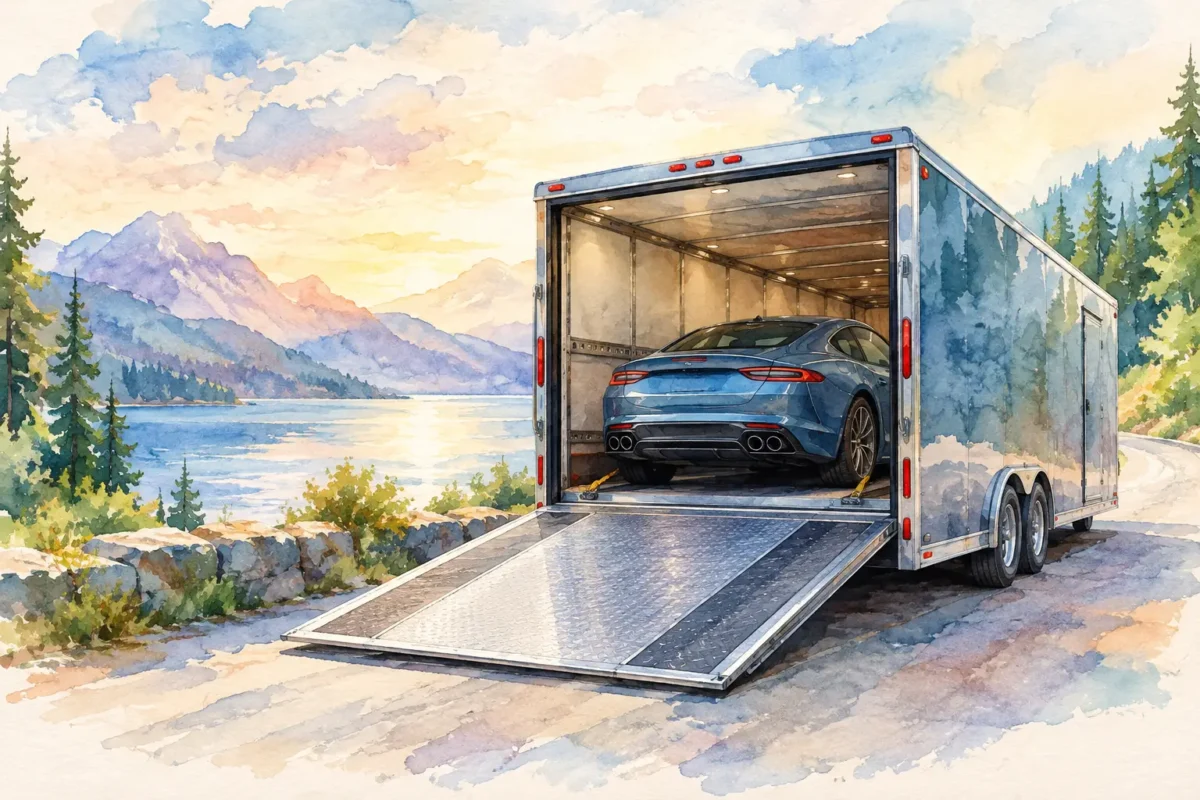
A collector car with a low front splitter, a newly purchased auction vehicle, and a high-value luxury SUV do not belong on the same transport plan. The best enclosed transport options protect the vehicle from weather, road debris, and unnecessary handling, but the right choice also depends on clearance, value, route, timing, and border requirements. For a U.S.-Canada move, transport is only one part of the job. The vehicle, title, customs filings, and release timing must all be coordinated correctly.
When Enclosed Transport Is the Right Choice
Open transport is a practical and cost-effective solution for many everyday vehicles. It is widely available, carries several vehicles at once, and usually provides the fastest scheduling options. Enclosed transport is different: it is intended for vehicles where exposure and handling risk matter more than achieving the lowest shipping price.
Choose an enclosed carrier when you are moving a classic, exotic, luxury vehicle, race car, restored truck, collector motorcycle, or a vehicle with fresh paint or sensitive trim. It is also a strong choice for auction purchases that cannot be inspected in person before pickup, especially when the vehicle is traveling a long distance or crossing the border during winter.
Enclosed service does not mean every shipment receives the same equipment or level of care. Trailer design, loading method, carrier experience, insurance coverage, and the number of stops all affect the result. Asking for “enclosed shipping” alone leaves too much open to interpretation.
Best Enclosed Transport Options by Vehicle Type
Standard multi-car enclosed trailer
A multi-car enclosed trailer is the most common option for collector cars, luxury vehicles, and higher-value daily drivers. These trailers typically carry several vehicles in protected compartments. Because the cost is shared across the load, this option is generally more affordable than reserving an entire trailer.
For most operable cars with reasonable ground clearance, it offers the best balance of protection, availability, and cost. The trade-off is scheduling. A shared enclosed load follows a route, so pickup and delivery dates are usually windows rather than exact appointments. Your vehicle may also be loaded and unloaded in sequence with other cars, although an experienced carrier will use proper securement and loading procedures.
This is often the right fit for a Bring-a-Trailer purchase, a specialty vehicle bought from a dealer, or a cross-country move where the car needs protection without requiring exclusive service.
Single-vehicle enclosed transport
A dedicated single-vehicle enclosed trailer gives you the most control over timing and handling. The vehicle is the only shipment in the trailer, which reduces stops, loading activity, and route changes. It is the preferred choice when a car has exceptional value, extremely low clearance, a limited delivery deadline, or a condition that requires specialized attention.
The higher price reflects the dedicated equipment, driver time, and direct route. For a rare collector car, race vehicle, prototype, or recently restored classic, that additional cost can be reasonable protection. It can also make sense when the pickup or delivery location is difficult to access and cannot accommodate a large multi-car rig.
Dedicated transport is not automatically faster in every case. Equipment must still be positioned, drivers must comply with hours-of-service rules, and weather or border conditions can affect the trip. But it provides more control than a shared route.
Liftgate and low-clearance enclosed service
A standard ramp can create a problem for low vehicles. Front splitters, long wheelbases, low exhaust systems, and modified suspension components can scrape during loading if the trailer is not equipped for the vehicle. Liftgate enclosed service, extended ramps, race ramps, or carefully managed loading angles can prevent expensive damage before the shipment even begins.
This option should be discussed before dispatch, not when the truck arrives. Provide the vehicle’s ground clearance, modifications, inoperable status, and any known mechanical concerns. Photos of the front, rear, and side profile are helpful. A carrier needs accurate information to send equipment that can load the vehicle safely.
Enclosed transport for inoperable vehicles
An inoperable vehicle can still move in an enclosed trailer, but the carrier must know whether it rolls, steers, brakes, and can be winched. A vehicle that does not start but rolls freely is very different from one with locked wheels or no steering control.
Winch capability, loading space, and safe securement must be arranged in advance. Do not assume an enclosed carrier can accept an inoperable vehicle simply because it is protected from the weather. Proper planning avoids a failed pickup, re-dispatch fee, or damage caused by trying to load unsuitable equipment.
What Protection Actually Means
Enclosed trailers shield vehicles from rain, snow, road salt, rocks, and many of the risks associated with highway travel. That is valuable, particularly on winter routes between the United States and Canada. Protection, however, is not a substitute for documentation and carrier verification.
Before pickup, record the vehicle’s condition with dated photos from all sides, plus close-ups of wheels, glass, paint, interior, and existing damage. Review the bill of lading carefully at pickup and delivery. Any new concern should be noted before the driver leaves.
Ask how the vehicle will be secured. Wheel straps are generally preferred because they secure the tires rather than placing stress on suspension components or frame attachment points. Verify the carrier’s cargo coverage and ask what exclusions may apply to aftermarket parts, loose personal items, or vehicles that arrive with undisclosed mechanical issues.
Personal belongings should not be placed in the vehicle unless the carrier has specifically approved them. They may not be covered, can shift during transit, and create additional complications on a cross-border move. Customs authorities are focused on the vehicle and its accompanying paperwork, not a car used as a moving container.
Cross-Border Enclosed Transport Requires More Coordination
A protected trailer does not solve customs compliance. When a vehicle is exported from the United States to Canada, or moved from Canada into the United States, the title and supporting documents must be ready well before the truck reaches the border.
For U.S. exports, the original title or acceptable ownership documentation generally must be submitted to the U.S. port at least 72 hours before export. An AES filing may also be required. For vehicles entering Canada, importers may need recall clearance, RIV processing, and documentation that supports admissibility and registration. Vehicles entering the United States may require EPA, DOT, and NHTSA-related compliance review depending on their origin, age, and specifications.
The practical issue is timing. A carrier cannot simply arrive at the border and wait while missing paperwork is located or an export notice is submitted. That can delay the entire load, affect other customers’ deliveries, and create storage or repositioning costs. The best plan aligns title review, customs entry, compliance requirements, pickup, and border crossing before the vehicle is dispatched.
Bidbuy Importers coordinates enclosed vehicle transport with customs brokerage, export filings, title handling, and U.S.-Canada import requirements, so customers are not left trying to connect separate transport and border providers after the truck is already scheduled.
How to Choose the Right Enclosed Carrier
Start with the vehicle, not the quote. A low-mileage collector car that is fully operable needs different equipment than a non-running classic with a low front valance. Be specific about the year, make, model, condition, modifications, pickup access, delivery access, and required timing.
Then compare service details. Confirm whether the quote is for a shared enclosed trailer or dedicated service, whether it includes winching or liftgate needs, and whether pickup and delivery are door-to-door or subject to safe meeting-point access. Residential streets with tight turns, low trees, or parking restrictions may require a nearby commercial lot or wider staging area.
Price matters, but a very low quote can reflect an unconfirmed carrier, unrealistic timing, inadequate equipment, or exclusions that become additional charges later. A clear written scope is more useful than a vague promise of premium service. You should know who is transporting the vehicle, what equipment is planned, what insurance applies, and what happens if weather or border clearance changes the schedule.
Plan the Shipment Before the Vehicle Is Released
The right enclosed shipment begins before pickup. Keep the fuel level low, remove loose accessories, disable toll tags, secure or retract antennas, and confirm that the vehicle can be accessed at both ends of the route. If the vehicle has a special starting procedure, alarm, battery cutoff, or air suspension, provide written instructions to the carrier.
For cross-border purchases, do not release the vehicle from the seller, dealer, auction yard, or storage location until the ownership documents and import plan have been reviewed. A protected trailer is valuable, but correct paperwork is what keeps the shipment moving.
Choose the level of enclosed service that matches the vehicle’s real risk, then coordinate transport and compliance as one plan. That approach protects more than the paintwork – it protects your delivery date, your budget, and your ability to put the vehicle on the road when it arrives.