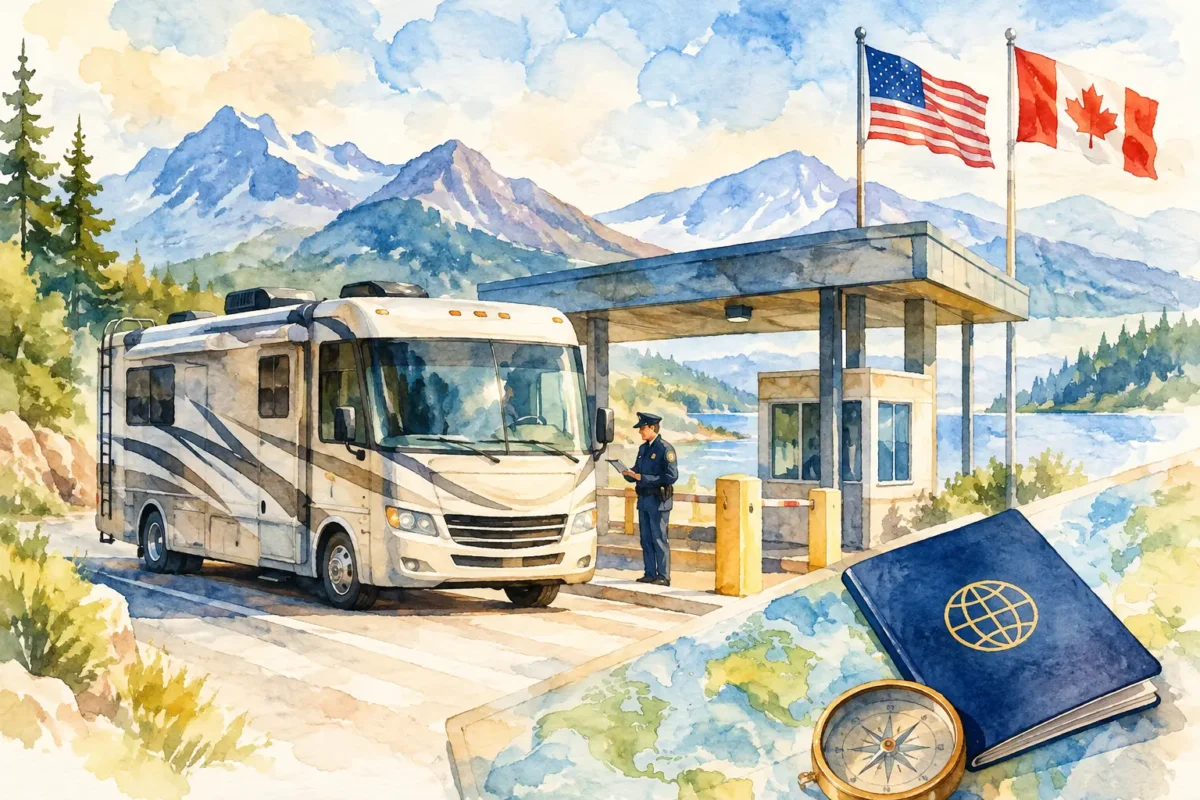
An RV purchase can look straightforward until it is time to move it across the U.S.-Canada border. A motorhome, fifth wheel, travel trailer, or camper may be ready for pickup, but the title, export notice, customs entry, compliance documents, and transport plan all have to line up. An rv border import service manages those moving parts so a purchase does not become an expensive delay at the border.
For private buyers, dealers, auction purchasers, and commercial operators, the value is not simply getting an RV from one country to another. It is getting it moved legally, with the right documentation and a clear plan for customs release, regulatory requirements, and final delivery.
What an RV Border Import Service Actually Handles
RV moves are more involved than typical passenger vehicle imports because the equipment can vary so widely. A self-propelled motorhome is treated differently from a towable trailer. A newer RV may have manufacturer labels and documentation that make compliance easier to establish, while an older or modified unit can require closer review before it is shipped.
A professional service begins by identifying the direction of travel and the type of RV involved. Importing a U.S.-built travel trailer into Canada is not the same process as bringing a Canadian motorhome into the United States. The border agency, export requirements, admissibility rules, taxes, and registration process can all differ.
The core work usually includes reviewing ownership documents, coordinating export filings or advance title submission when required, preparing customs documentation, and arranging the vehicle’s entry. Depending on the unit and destination, the file may also require support for EPA, DOT, NHTSA, safety, recall, or Registrar of Imported Vehicles requirements.
Transport is another major part of the job. An RV may be drivable, towable, oversized, inoperable, or located at an auction yard with limited pickup access. The right carrier, route, timing, and border crossing must be coordinated before the RV leaves the seller.
Start With the RV, Not the Border Crossing
The most costly mistakes happen before an RV is purchased. Buyers often focus on price, floor plan, mileage, or condition and assume the border paperwork can be handled afterward. In reality, import eligibility should be confirmed before money changes hands.
Start with the VIN, year, make, model, country of manufacture, and whether the unit is a motorhome or a trailer. Ask for clear copies of the title or ownership document, registration if applicable, purchase invoice, and any lien release. If the seller cannot provide clean ownership paperwork, the border process may stop before it starts.
For U.S. imports, the RV’s original certification labels, emissions status, and safety compliance can matter. Some vehicles may be admissible as built, while others need additional compliance coordination. For Canadian imports, recall clearance and RIV-related processing may be part of the plan for qualifying vehicles. The correct answer depends on the specific unit, not a general rule found on an online forum.
Modifications deserve special attention. Solar systems, upgraded suspension, aftermarket lighting, propane equipment, rebuilt status, and conversions can all affect how a unit should be evaluated. Modifications do not automatically prevent importation, but they are a reason to review the file early rather than discover an issue at the crossing.
Title Review and Export Notice Cannot Wait
A valid title is more than proof that the RV was sold. It is often central to the export process. When a vehicle is leaving the United States for Canada, U.S. Customs and Border Protection may require advance submission of title information before export. The commonly referenced 72-hour requirement is not a suggestion to handle after pickup. Missing the deadline can mean the unit cannot cross as scheduled.
Title requirements also vary based on the RV’s classification and state of origin. Some towable trailers may be handled differently from motorized units, and some states issue ownership documents that require additional explanation. Salvage, rebuilt, duplicate, or lien-marked titles should always be reviewed before transport is booked.
A hands-on import partner checks the paperwork against the planned movement. That includes confirming that names, VINs, and ownership details are consistent across the title, bill of sale, auction invoice, and customs paperwork. One wrong digit in a VIN can hold up release, storage, carrier scheduling, and delivery.
Customs Clearance Is Only One Part of the Move
Customs release is a critical checkpoint, but it is not the entire RV import process. A complete plan accounts for the paperwork before the crossing and the steps required after release.
For a U.S.-bound RV, this may involve customs entry preparation and coordination of applicable federal compliance information. For an RV entering Canada, the process can include customs release, duties and taxes where applicable, recall documentation, and RIV processing for eligible vehicles. A buyer also needs the documents necessary to register and insure the RV in the destination province or state.
Duty treatment can depend on country of origin, not just where the RV was purchased. A U.S.-built RV bought from a Canadian seller and a European-built RV bought in the same location may not have identical duty considerations. That is why a VIN and manufacturer information should be reviewed before the purchase is finalized.
Buyers should also separate customs requirements from local registration requirements. Border clearance does not automatically mean an RV is ready for plates, insurance, or road use. Provincial and state agencies can have their own inspection, tax, and registration rules. A proper import file gives the customer a clear documentation trail for the next step.
Transport Planning for Motorhomes and Towable RVs
RV transportation needs to match the equipment’s actual condition. A running motorhome may be driven or loaded onto a specialized carrier, but the best choice depends on its size, mechanical condition, distance, and pickup location. A travel trailer or fifth wheel may need a qualified tow-away carrier, while an inoperable unit may require a flatbed, lowboy, or equipment trailer.
The lowest transport quote is not always the best option. A carrier that lacks the right equipment, insurance, border experience, or pickup flexibility can create delays that erase any initial savings. This is especially true with auction purchases, where storage fees can begin quickly and release windows may be limited.
Timing matters as well. The carrier must arrive after export paperwork is ready, not before. Border appointments, customs hours, congestion, weather, oversized dimensions, and seasonal demand can all influence the schedule. A coordinated service keeps title review, export notice, customs entry, and dispatch on the same timeline.
Bidbuy Importers can coordinate those details from border processing through transport, storage when needed, and delivery planning. That single point of coordination is particularly useful when the buyer is in another state or province and cannot inspect paperwork or meet a carrier in person.
When You Need More Than Basic Brokerage
A standard customs transaction may be enough for a straightforward, properly documented RV that is already confirmed as admissible. But many purchases need more active handling. First-time buyers may need help understanding which documents to request from a seller. Dealers may need recurring support for multiple auction purchases. Commercial owners may be moving specialty units, buses, truck-based campers, or RVs with equipment modifications.
The right level of service depends on the risk in the transaction. A newer, stock, clean-title RV from an established dealer is usually easier to plan than an older motorhome with a lien payoff, aftermarket conversion, and a remote auction pickup. The process should be tailored to the unit rather than forced into a one-size-fits-all shipping quote.
Before committing to a purchase, have the VIN and ownership documents reviewed, confirm the intended border crossing, and establish whether the unit will be driven, towed, or transported. Those few steps can prevent the most common border problems before they become storage charges, missed pickup dates, or a stranded RV.
A good RV import plan gives you more than a customs release number. It gives you confidence that the RV you bought can leave the seller, cross the border correctly, and arrive ready for its next chapter on the road.