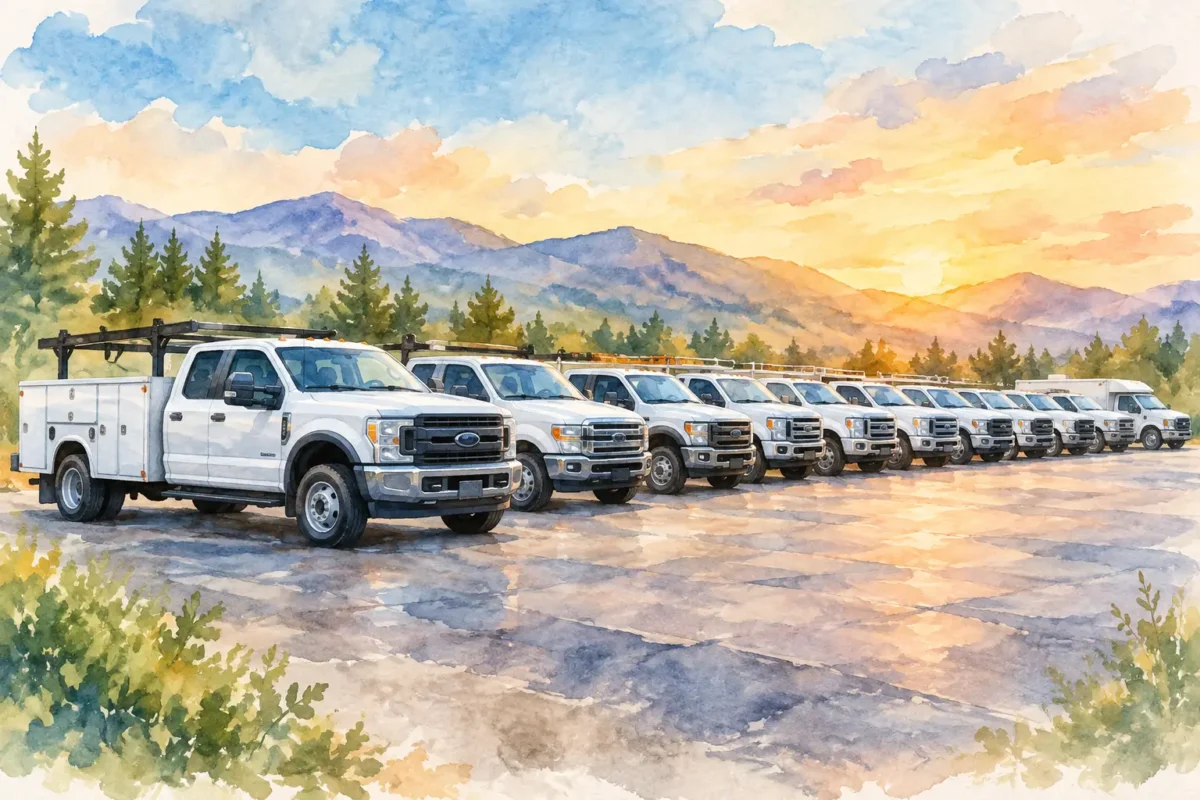
A fleet import example is easiest to understand when the vehicles have a real job waiting for them. Picture a Canadian contractor that buys 12 late-model work trucks from a U.S. dealer after winning a new service contract. The price is right, the trucks are available now, and the buyer needs them delivered to a yard in British Columbia within weeks – not sitting at the border while paperwork is corrected.
Moving one vehicle across the U.S.-Canada border requires planning. Moving 12 adds another layer: every VIN, title, recall record, compliance document, transport position, and customs entry must match. A small error on a single truck can hold up that unit. A poorly coordinated process can disrupt the entire delivery schedule.
This example shows what a properly managed commercial fleet import looks like from purchase through final delivery.
The Fleet Import Example: 12 U.S. Trucks for Canada
The Canadian buyer purchases 12 gasoline-powered 2022 pickup trucks from a dealership in Washington State. Each truck has a clean U.S. title, but the titles are still held by the seller’s lender. The buyer wants the vehicles imported into Canada, processed correctly, and transported to its operations yard near Surrey, British Columbia.
Before anyone schedules a carrier, the first question is whether each truck is admissible into Canada. Passenger vehicles and light-duty trucks may require processing through the Registrar of Imported Vehicles program, while certain commercial vehicles can follow a different path. Vehicle age, VIN configuration, original market, manufacturer labeling, modifications, and weight rating all matter. A truck that looks identical to another unit in the lineup may have a different compliance status because it was built for a different market or has been altered after sale.
The importer also needs to confirm there are no open safety recalls that prevent RIV completion. This is not paperwork to chase after the trucks are at the border. Recall clearance should be requested early, especially when the seller, manufacturer, or lender must provide documents.
Step 1: Build a VIN-by-VIN file
A fleet is not one import transaction with 12 copies of the same paperwork. It is 12 individual vehicles grouped into one operational plan. The import team collects and reviews the title for each truck, bill of sale or dealer invoice, VIN list, buyer information, odometer details, recall clearance information, and any available manufacturer compliance labels.
This review catches problems before they become border problems. Common issues include a title that does not match the VIN supplied by the dealer, a lien that has not been released, an unsigned title, a missing page, or an invoice that combines vehicles without clearly assigning a value to each unit.
For this fleet, the lender sends the original titles only after the dealer payoff is complete. That means the transport plan cannot rely on assumptions about when the titles will arrive. The export filing schedule needs to follow the documents, not the buyer’s preferred pickup date.
Step 2: Meet the U.S. 72-hour export requirement
Used self-propelled vehicles exported from the United States generally require advance title submission to U.S. Customs and Border Protection at the intended port of export. The required notice period is commonly referred to as the 72-hour rule. Original title handling and port procedures need to be coordinated carefully, because a carrier arriving before the export documents are accepted can create expensive delays.
For the 12-truck fleet, the export coordinator confirms the port, reviews every title, prepares the required export information, and submits the documentation within the required time frame. If electronic export reporting is required, the Automated Export System filing must also accurately identify the exporter, consignee, VINs, vehicle values, and export details.
The practical lesson is simple: do not load a commercial fleet first and try to solve title requirements later. A truck can be physically ready to move while still being legally unready to export.
Customs Entry Is More Than a Border Stop
Once the export side is positioned, the Canadian import entry must be prepared. The customs declaration needs the correct buyer of record, vehicle values, tariff classification where applicable, country-of-origin information, and supporting commercial documents. Duties and taxes depend on the specific transaction and the vehicle’s origin, so a U.S. purchase does not automatically mean duty-free treatment.
In this example, eight of the trucks were manufactured in the United States, while four were built elsewhere. Their country of origin is confirmed from reliable records rather than guessed from the selling location. This matters because customs treatment may differ even when all 12 units were purchased from the same U.S. dealer.
The broker also coordinates the timing of the release. The goal is not simply to get the trucks through the port. It is to make sure the vehicles are released in the right sequence for inspection, RIV processing where required, and onward transport. If the receiving yard cannot accept all 12 trucks on the same day, delivery can be staged instead of creating a storage problem at the border.
Step 3: Coordinate RIV and safety requirements
For light-duty vehicles subject to the RIV program, each qualifying truck needs to be entered properly and completed through the required process. Recall clearance, import forms, and inspection requirements must be handled on schedule. Some vehicles may need modifications before they can pass inspection, such as daytime running lights or metric speedometer compliance where applicable.
That does not mean every commercial vehicle follows the same checklist. Heavy-duty trucks, trailers, buses, machinery, and specialty equipment can fall under different regulatory categories. A fleet of Class 8 tractors should not be processed as though it were a group of consumer pickup trucks. The correct approach depends on the equipment, its weight rating, intended use, and applicable transport and safety rules.
For the 12 pickups, the importer confirms which units require RIV processing and provides the buyer with a clear checklist for inspections and registration. Because the vehicles are intended for a working fleet, the buyer also verifies provincial registration and insurance requirements before the delivery date. Customs release is a major milestone, but it is not the same thing as having road-ready, registered fleet assets.
Transport Planning Protects the Schedule and the Trucks
The trucks in this fleet cannot all be driven across by employees. The buyer needs the odometers controlled, insurance exposure limited, and the vehicles delivered with documented condition. A commercial vehicle carrier is arranged to collect the units from the U.S. dealer after export approval and move them through the selected border crossing.
Condition reports are completed at pickup. This is especially valuable for auction purchases and dealer trades, where a disagreement about a scratch, missing accessory, or windshield chip can quickly become a costly dispute. Keys, spare keys, manuals, accessories, and temporary plates are tracked as part of the handoff.
There is a trade-off between speed and cost. A dedicated transport solution may move the fleet on a tighter schedule but cost more than combining the trucks with other loads. Storage near the border can help when paperwork and transport timing do not line up, but storage fees can grow quickly if the buyer has not planned for inspection or final delivery.
Bidbuy Importers coordinates these moving parts so the buyer has one accountable team for document review, export notice timing, customs release, RIV support, storage, and vehicle transport. That matters most when the fleet is tied to a business launch date, seasonal demand, or a contract that cannot wait for border paperwork to catch up.
What Could Have Gone Wrong?
This fleet import stays on track because the team reviews the transaction before dispatching the trucks. Without that step, several common failures could have created delays. A lender-held title could miss the 72-hour export window. An open recall could interrupt RIV completion. A VIN typo on an invoice or export filing could force corrections. A carrier could arrive at the wrong port, or the receiving yard could be unprepared for a 12-unit delivery.
The biggest mistake is treating fleet importing as a larger version of moving a single personal vehicle. Fleet moves need a controlled process, a master VIN schedule, document ownership, and contingency planning for title, lender, transport, and border timing issues.
If you are buying multiple vehicles in the United States for use in Canada, start the import review before funds are released or carriers are booked. The right time to solve a title, recall, customs, or compliance issue is while the trucks are still at the seller’s lot – not when your fleet is lined up at the border.