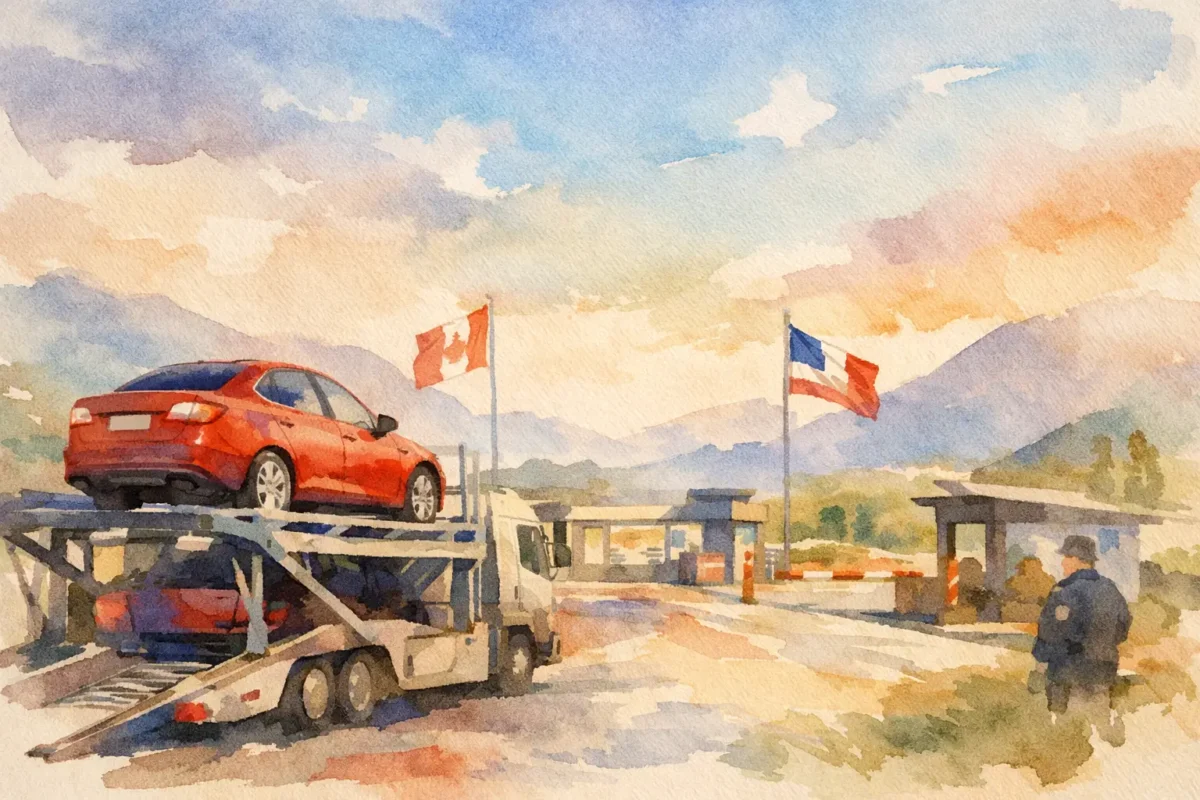
A car can be physically loaded onto a truck in minutes. Getting it legally released at the U.S.-Canada border is where the real work happens. When you ship car across border, the title, export notice, customs entry, vehicle eligibility, and delivery schedule all need to line up. One missing document can leave a vehicle waiting at the port while storage charges and transport delays build.
For private buyers, dealers, auction purchasers, and commercial operators, the best approach is to treat cross-border shipping as a compliance project first and a transportation job second. The carrier moves the vehicle, but proper planning is what gets it across the border.
Start With the Direction of the Move
The process changes depending on whether the vehicle is entering the United States or Canada. A U.S.-bound vehicle may require review of federal safety and emissions requirements, while a Canada-bound vehicle must meet Canadian admissibility rules and may require Registrar of Imported Vehicles processing.
The vehicle’s age, country of manufacture, title status, and intended use all matter. A late-model passenger car can have very different requirements from a collector vehicle, semi tractor, RV, trailer, bus, or piece of construction equipment. Do not assume that a vehicle registered in one country can automatically be registered in the other.
Before arranging pickup, confirm that the vehicle is eligible to import and identify the port where it will be exported and entered. This is especially important when buying at auction or from a private seller, where paperwork may not be ready when the sale closes.
Get the Title and Ownership Documents Right
The original title is one of the most important documents in a cross-border vehicle move. Customs authorities use it to verify ownership and to screen for theft, liens, and other issues. A photocopy, an incomplete title assignment, or a title that does not match the seller’s name can stop the process.
For many U.S. vehicle exports to Canada, U.S. Customs and Border Protection requires the title information to be submitted to the specific export port at least 72 hours before export. The requirement is tied to the port and its procedures, so the paperwork must be sent to the correct location and accepted before the vehicle arrives for crossing. Showing up with a title on the day of transport is a common and costly mistake.
If the vehicle has a lien, obtain the appropriate lender authorization and lien release documentation. Salvage, rebuilt, branded, or non-repairable vehicles deserve extra attention because admissibility and registration rules can vary. Buyers should also verify the vehicle identification number on the vehicle itself against the title and sale documents before transportation begins.
How to Ship a Car Across the Border With the Right Paperwork
A professional cross-border shipment generally involves more than a bill of lading and a carrier pickup order. The required package depends on the move, but it commonly includes the signed title or ownership record, bill of sale, photo identification, vehicle identification number details, and any lien-related documents.
For a vehicle entering Canada, recall clearance documentation and RIV-related processing may be required for eligible vehicles. For a vehicle entering the United States, NHTSA, DOT, and EPA requirements can apply. Some vehicles may qualify for exemptions based on age or other factors, but exemptions should be confirmed before purchase, not after the vehicle has already been delivered to the border.
Commercial units need an even closer review. A heavy-duty truck, semi tractor, machinery unit, trailer, or bus may involve different documentation, classification, and compliance considerations than a standard passenger car. The vehicle’s condition, use, weight rating, and equipment can affect how it is processed.
A customs broker or experienced import specialist can prepare entry documents, coordinate release, and identify issues early. This is valuable for first-time buyers, but it is just as useful for dealers who need a repeatable process for multiple units each month.
Schedule Transport Around Customs Timing
Transport should not be booked based only on the seller’s preferred pickup date. The pickup, storage, export filing, customs release, and border crossing must be coordinated in the correct order.
An enclosed carrier may be the better choice for high-value collector cars, low-clearance vehicles, or specialty auction purchases. Open transport is often more economical for standard cars and trucks. For oversized equipment, RVs, and commercial vehicles, the right solution may be drive-away service, flatbed transport, step-deck equipment, or a specialized commercial carrier.
The lowest transport quote is not always the lowest total cost. A carrier that arrives before export clearance is complete can trigger storage charges. A carrier unfamiliar with cross-border procedures may not be prepared for port instructions or customs timing. And a vehicle that cannot clear due to documentation problems may need to be unloaded, stored, and rescheduled.
A complete plan should account for the following:
- Seller or auction release timing
- Title submission and the 72-hour U.S. export notice period when required
- Customs entry preparation and release
- Carrier availability and equipment type
- Border-port hours and inspection contingencies
- Final delivery appointment or dealership receiving hours
This coordination is where a full-service provider adds value. Bidbuy Importers can manage documentation, customs handling, compliance support, storage, and transport as one coordinated process instead of leaving the customer to manage separate vendors.
Know the Costs Before the Vehicle Moves
Cross-border shipping costs are more than the carrier’s rate. Depending on the vehicle and direction of travel, the total may include customs brokerage, export filing, duties, taxes, compliance processing, inspection-related fees, storage, and local delivery charges.
Duty treatment can depend on where the vehicle was manufactured, not simply where it was purchased or currently registered. Taxes and provincial or state requirements also vary. A vehicle purchased in Washington, for example, may have been built outside North America and therefore require a different duty review than a North American-manufactured unit.
Ask for a clear breakdown of expected service charges before committing to the shipment. No provider can control every inspection or government delay, but an experienced team can explain the known costs, identify likely variables, and avoid surprises caused by incomplete information.
Avoid the Delays That Catch Buyers Off Guard
The most preventable delays usually start before the vehicle is picked up. Buyers often purchase first and investigate eligibility afterward. That can work out, but it creates unnecessary risk when the vehicle has a branded title, an unresolved recall, missing manufacturer labels, modifications, or a complicated ownership history.
Another issue is assuming the seller understands export paperwork. Private sellers, dealerships, and auction yards may be excellent at completing a domestic sale without knowing what is required for a cross-border transaction. The buyer remains responsible for making sure the documents are usable for export and import.
Vehicle modifications also deserve attention. Lift kits, lighting changes, emissions equipment changes, non-standard bumpers, and other alterations can affect admissibility or inspection. The same is true for vehicles that have been declared non-repairable or are being imported for parts rather than road use.
Finally, keep communication active. The shipper, broker, seller, auction facility, and receiving party should all have the same vehicle details, pickup authorization, and expected timeline. A single incorrect VIN digit or a carrier sent to the wrong port can turn a routine move into a multi-day delay.
Choose a Partner That Handles Both Compliance and Transport
A domestic auto transporter can move a car from one city to another. Cross-border vehicle movement requires a team that understands titles, export procedures, customs release, regulatory requirements, and carrier operations at the same time.
That distinction matters most when something is not standard: a purchased auction vehicle with a missing release, a Canadian vehicle entering the U.S., a trailer with incomplete ownership documents, or a commercial truck headed to a dealership across the border. The right team can identify the issue before dispatch, explain the available options, and keep the shipment moving without guesswork.
If you are preparing to move a vehicle between the United States and Canada, gather the ownership documents early and have the vehicle reviewed before scheduling a truck. A properly planned shipment protects your purchase, your timeline, and your ability to put the vehicle on the road where it belongs.