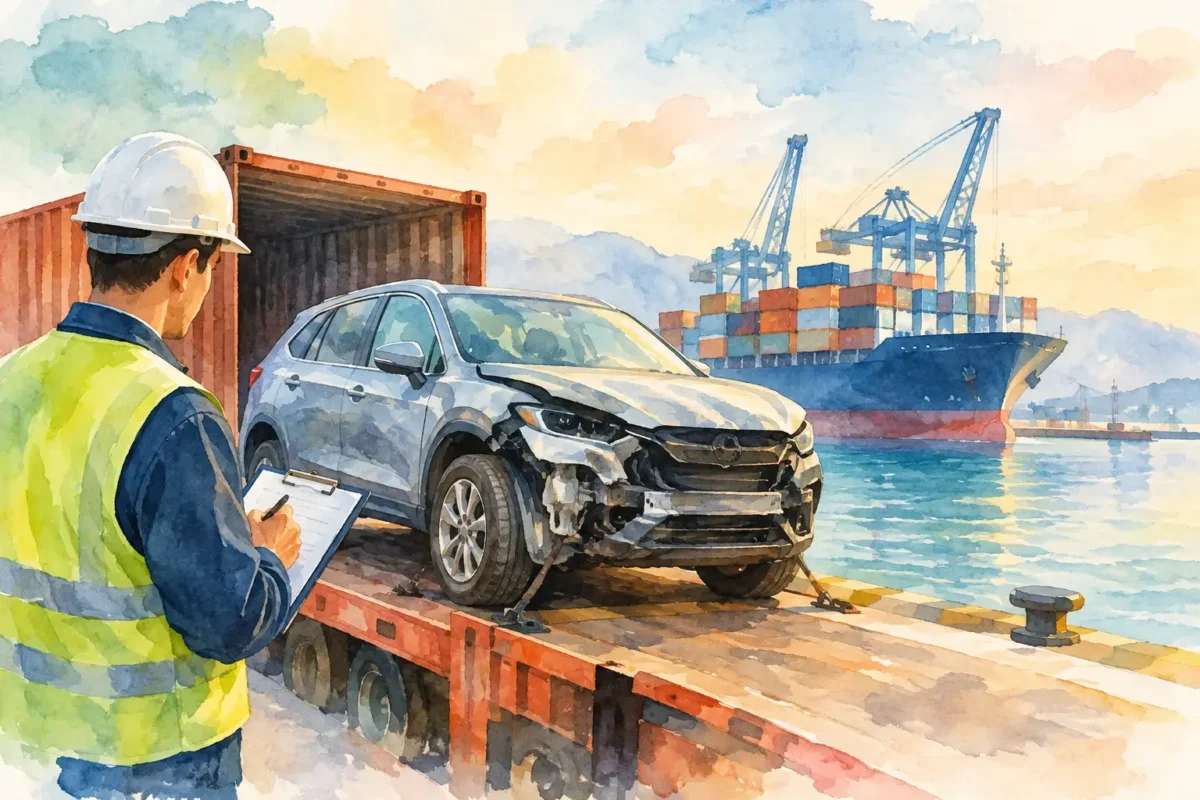
A low auction bid can stop looking like a bargain the moment the vehicle reaches the border with a missing title, an inadmissible brand, or no compliance plan. Knowing how to import salvaged vehicles starts before you bid. Salvage vehicles can move across the U.S.-Canada border, but the paperwork, condition, and destination rules must line up from the beginning.
A salvage title is not simply a discounted version of a clean title. It signals that an insurer, state, or provincial authority has classified the vehicle because of significant damage, theft recovery, flood exposure, or another loss event. That classification affects export clearance, customs documentation, repair planning, registration, and resale value. The right process protects your purchase and keeps the vehicle from sitting in storage while problems are sorted out.
Start With the Salvage Brand and Destination Rules
Before buying, obtain a copy of the title or salvage certificate and read the brand exactly as it appears. Terms such as salvage, rebuilt, flood, junk, parts only, nonrepairable, and certificate of destruction do not carry the same consequences. A rebuilt vehicle may be eligible for import and later registration if it meets the required standards. A parts-only or nonrepairable vehicle may not be eligible for road use at all, regardless of how good it looks in auction photos.
The destination matters just as much as the title. A U.S. vehicle entering Canada must meet federal admissibility requirements and then the registration and inspection requirements of the province where it will be used. A vehicle coming into the United States must meet U.S. Department of Transportation and Environmental Protection Agency requirements unless a valid exemption applies.
Do not assume a vehicle that can be titled in the state where it was purchased can automatically be registered across the border. Salvage branding, prior damage, model year, manufacturing origin, recalls, and modifications can all affect the answer. Check eligibility before funds are committed, especially for flood vehicles, heavily modified trucks, RVs, motorcycles, and commercial equipment.
Confirm the Vehicle Can Be Exported
For vehicles leaving the United States, U.S. Customs and Border Protection requires advance export documentation. In most cases, the title or ownership document must be submitted to the port of export at least 72 hours before the vehicle crosses. The port may have specific instructions on where and how documents must be presented, and timing errors can stop the shipment at the border.
This is where auction buyers often run into trouble. The auction may release the vehicle before the original title is available, or it may issue a salvage certificate that requires additional processing. A bill of sale alone is usually not a substitute for the ownership document required for vehicle export. Confirm who holds the original document, when it will be released, and whether the document is acceptable for your intended border crossing.
If the shipment requires an Automated Export System filing, complete it accurately before movement. The vehicle identification number, title details, exporter information, and port selection need to match the actual transaction. Incorrect data can create delays that are costly when a carrier, tow truck, or storage yard is already scheduled.
Build the Import File Before the Vehicle Moves
A clean import file makes border processing faster and gives you a clear record for future registration, repair, and resale. The core documents generally include the title or salvage certificate, bill of sale, auction invoice if applicable, photo identification, vehicle identification number, and transport details. Customs may also require supporting documents based on the transaction, ownership, vehicle type, and country of origin.
For vehicles entering the United States, importers commonly need DOT and EPA declaration forms. A salvage vehicle that was not originally built to U.S. safety and emissions standards may need to be imported through a Registered Importer, modified as required, and released only after the proper process is complete. Age-based exemptions may apply to certain older vehicles, but they are not a shortcut for every vehicle or every situation.
For vehicles entering Canada from the United States, the vehicle must be reviewed for admissibility and may require Registrar of Imported Vehicles processing. Recall clearance documentation is often part of the process. A salvage brand does not erase the need for federal compliance, and federal clearance does not replace provincial inspection or rebuilt-status requirements.
The practical rule is simple: determine the import path before arranging transport. A vehicle that needs repairs, inspection, or compliance work should not be treated like a normal drive-away purchase.
Understand Customs, Taxes, and Fees
Import costs are more than the winning bid and transport charge. Your budget may include customs duties, sales taxes, excise taxes where applicable, brokerage fees, export filing fees, regulatory processing, storage, towing, inspection, and repair work. Whether duty applies can depend on the vehicle’s origin and the documentation available to support that origin.
Salvage status does not automatically reduce customs value. Customs authorities look at the transaction and supporting records, so keep the auction invoice, payment confirmation, title documents, and condition report. A low price can be legitimate, but it should be documented clearly.
Commercial vehicles deserve additional planning. Semi tractors, buses, trailers, machinery, and RVs can involve different classification, equipment, and transport requirements than passenger cars. Oversize dimensions, inoperable condition, axle weight, and cargo status can change the shipping plan and the cost.
Plan Transport Around the Vehicle’s Actual Condition
Many salvage vehicles do not run, steer, brake, or roll safely enough for ordinary carrier loading. Tell the transporter exactly what condition the vehicle is in. A carrier needs to know whether it starts, whether keys are available, whether tires hold air, whether the suspension is damaged, and whether the vehicle has fluid leaks or loose parts.
An inoperable vehicle may require a winch-equipped carrier, forklift support, or specialized equipment. Flood-damaged or collision-damaged vehicles may also have battery, fuel, or hazardous-material concerns that affect acceptance. Never describe a nonrunning vehicle as operable just to obtain a lower transport quote. The resulting failed pickup can cost more than arranging the right equipment upfront.
It is also wise to document the vehicle’s condition before pickup. Save auction photos, take additional photos at release, and record visible damage, loose parts, warning lights, and the odometer reading. This supports insurance claims if damage occurs during transport and helps your repair shop assess the vehicle on arrival.
Repair and Inspection Come After Proper Entry
Importing a salvage vehicle is not the same as making it road legal. After customs release, the vehicle may still need structural repairs, replacement airbags, glass, lighting, emissions equipment, tires, or other work before inspection. The required inspection process depends on where the vehicle will be registered.
Use qualified repair facilities and retain invoices for major parts and labor. In many jurisdictions, rebuilt inspections focus on stolen parts, vehicle identity, safety systems, and the quality of repairs. Missing receipts or questionable replacement components can create problems long after the border crossing is complete.
Be realistic about total cost. A lightly damaged late-model vehicle may be a strong value when parts are available and repairs are straightforward. A flood vehicle or unit with frame, airbag, electrical, or advanced driver-assistance damage can consume a budget quickly. The best purchase is not always the lowest bid. It is the vehicle with a clear title path, predictable compliance requirements, and repair costs you can verify.
How to Import Salvaged Vehicles With Fewer Surprises
The safest approach is to coordinate the title review, export notice, customs entry, regulatory paperwork, and transport as one operation. Splitting those steps among multiple parties can work, but it increases the chance that a carrier arrives before export clearance is ready or that a title issue is found after the vehicle is already at the border.
Bidbuy Importers coordinates cross-border salvage vehicle movement from document review through customs release and transportation, helping buyers, dealers, and auction customers keep the process organized. Professional handling is especially valuable when the vehicle is nonrunning, the title is delayed, or the shipment involves a truck, trailer, RV, or other specialized equipment.
Before you place your next auction bid, get the title reviewed, confirm the destination’s eligibility rules, and price the transport and compliance work honestly. That preparation gives you something far more valuable than a cheap purchase: a vehicle that has a workable path from the auction yard to legal use.