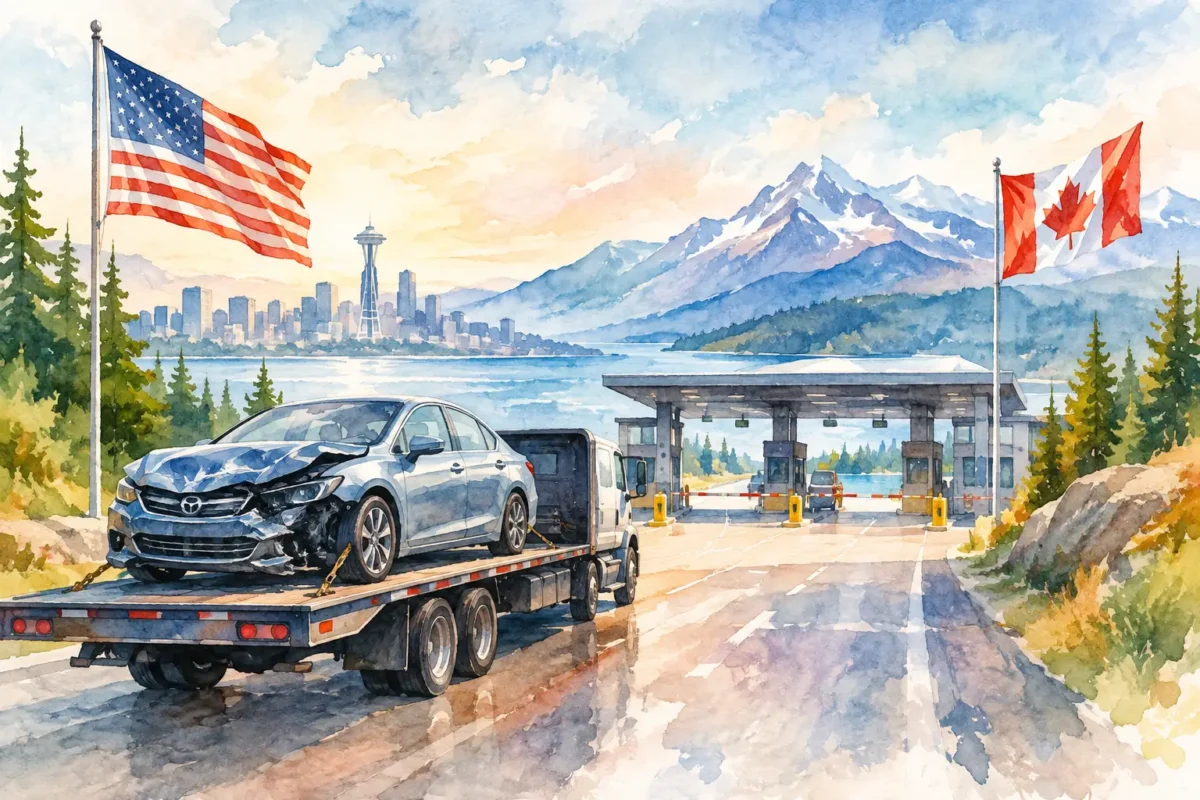
A low auction price can turn expensive fast when the vehicle has a salvage brand and the border plan starts after the purchase. Salvage title importing between the United States and Canada is not simply a matter of loading a vehicle onto a carrier and presenting paperwork at Customs. The title brand, direction of travel, vehicle age, admissibility, repair status, and export timing can all determine whether the vehicle moves legally or sits in storage.
For buyers, dealers, auction customers, and commercial operators, the right question is not just whether a salvage vehicle can be purchased. It is whether that exact vehicle can be exported, imported, repaired, registered, insured, and transported at a cost that still makes sense.
Why Salvage Title Importing Requires a Plan Before You Bid
A salvage title generally means an insurer or licensing authority determined that a vehicle sustained damage significant enough to meet its total-loss threshold. That threshold varies by jurisdiction. The brand does not always tell you how severe the damage was, whether it was repaired correctly, or whether the vehicle can be legally imported into the destination country.
This is where buyers get caught off guard. An online auction listing may show a vehicle that appears repairable, but the title can be branded salvage, nonrepairable, parts only, flood, junk, or another designation that creates a very different border and registration outcome. The vehicle condition report and photos matter, but the actual title record matters more.
Before bidding, confirm the title status with the selling party and review the destination country’s rules. Do not assume a clean-looking vehicle with a salvage history is automatically eligible to cross the border. A title brand that is manageable in one state or province may prevent registration or import in another.
Salvage, Rebuilt, and Nonrepairable Are Not the Same
A salvage title is often the starting point in an insurance-total-loss process. After approved repairs and inspections, some jurisdictions may issue a rebuilt, reconstructed, or revived salvage title. That new brand still follows the vehicle, but it can have a different legal and practical status than an unrepaired salvage vehicle.
Nonrepairable, junk, or parts-only designations are more restrictive. These vehicles are typically not intended to return to road use. Even when a seller claims a vehicle can be rebuilt, the controlling document is the title and the rules of the jurisdiction where it will be imported and registered.
Flood and fire damage require extra caution. Corrosion, electrical faults, airbag issues, and mold may not be visible in auction images. For a vehicle intended for resale, a professional inspection and a realistic repair estimate are essential before committing to cross-border transport, taxes, fees, and storage.
Importing a Salvage Vehicle Into Canada
Canada has strict admissibility requirements for vehicles entering from the United States. For many newer vehicles, import eligibility is tied to the vehicle’s compliance status and the Registrar of Imported Vehicles process. A U.S. salvage-branded vehicle may not be admissible for import into Canada, while a properly rebuilt vehicle may require careful review of its title history, documentation, and provincial inspection requirements.
The distinction is critical. Buyers should not rely on a verbal assurance from an auction, seller, or transporter that a salvage vehicle can be registered in Canada. Confirm eligibility before the sale closes, especially for late-model passenger vehicles, trucks, SUVs, and motorcycles.
A vehicle that is eligible for federal import is not automatically ready for the road. Provincial registration, inspection, rebuilt-vehicle procedures, and insurance requirements can still apply. If the vehicle has been repaired in the United States, keep repair invoices, parts receipts, inspection documents, and clear photographs of the work. Those records can be valuable when establishing the vehicle’s history and condition.
Older vehicles may follow different rules. Age exemptions can change federal compliance requirements, but they do not erase title, Customs, provincial registration, safety, or tax obligations. Every vehicle should be reviewed based on its year, VIN, title brand, and final destination.
Bringing a Canadian Salvage Vehicle Into the United States
For U.S. imports, a salvage title does not remove federal safety and environmental requirements. A vehicle that was not originally manufactured to U.S. standards may need to qualify for import through an eligible vehicle determination and, where applicable, a Registered Importer process. EPA requirements also need to be addressed.
Canadian-market vehicles can look nearly identical to U.S. models, but small differences in certification labels, lighting, emissions equipment, or safety equipment may matter. A vehicle’s title status and its compliance status are separate issues. A rebuilt Canadian vehicle may have a title suitable for its province but still require a clear U.S. import compliance strategy.
Vehicles that are at least 25 years old can fall under different federal rules, yet buyers should still verify the vehicle’s identity, ownership documents, Customs entry requirements, and state-level registration rules. A vintage salvage vehicle can be a worthwhile project, but only when its paperwork and restoration scope are understood from the beginning.
Documents That Cannot Be an Afterthought
Border agencies need documentation that matches the vehicle exactly. A missing signature, a VIN discrepancy, an improperly assigned title, or an unclear ownership chain can delay release. Auction paperwork is not always a substitute for the title or ownership document required for export and import.
For most salvage title importing transactions, the file should be assembled before transport is booked. It commonly includes:
- The original title or acceptable ownership document, correctly assigned where required
- Bill of sale and auction purchase documents showing the buyer, price, and VIN
- VIN, title-brand, and lien-status verification
- Export documents and required advance title submission for used self-propelled vehicles leaving the United States
- Import declarations, Customs entry documents, and any compliance forms required for the destination country
When exporting a used self-propelled vehicle from the United States, the 72-hour export prior notice requirement is a major timing issue. The required title information must be submitted to the proper port before export. A carrier arriving early does not speed up that process. It can create storage costs, missed appointments, and unnecessary pressure on a transaction that should have been planned days earlier.
Title requirements can also vary by port and by the vehicle’s document type. Salvage certificates, electronic titles, duplicate titles, and lien releases deserve early review. Do not wait until the truck is loaded to find out whether the port will accept the document package.
Compliance and Repairs Must Be Treated Separately
Repairing collision damage does not automatically make a vehicle compliant for cross-border import. Conversely, a vehicle that meets federal import rules may still need reconstruction inspections before it can receive local registration.
Buyers should separate the project into two tracks. The first is border admissibility: Can the vehicle legally leave one country and enter the other? The second is roadworthiness and registration: What inspections, repairs, certifications, and title changes are required before it can be driven or sold?
This approach helps prevent a common mistake: spending heavily on repairs before confirming that the vehicle can be titled in the destination jurisdiction. It also protects dealers from carrying inventory that cannot be retailed as planned.
Transport Matters More With a Salvage Vehicle
A damaged auction vehicle may not roll, steer, brake, or start. It may have loose body panels, deployed airbags, leaking fluids, or missing keys. Those conditions affect the type of carrier needed, the loading method, the cost, and whether the vehicle can be moved safely.
Open transport may be appropriate for a repairable vehicle that rolls and can be securely loaded. Non-running or heavily damaged units may require winch service, specialized equipment, or enclosed transport. Commercial vehicles, RVs, trailers, machinery, and semis need their own transport plan based on dimensions, weight, axle condition, and loading access.
A complete damage description is not optional. Accurate information allows the transport team to dispatch the correct equipment and avoid a failed pickup. It also helps establish realistic timing between auction release, title availability, export filing, border processing, and final delivery.
Know When to Walk Away
Some salvage purchases should not proceed. Walk away when the title is nonrepairable for the intended purpose, the VIN history does not match the paperwork, a lien cannot be cleared, the vehicle is not eligible for import, or the repair and transport costs erase the auction savings.
The best salvage transactions are planned before the bid, not rescued at the border. Bidbuy Importers can coordinate the title review, export timing, Customs handling, compliance support, and vehicle transport needed to move qualifying vehicles with fewer surprises. Before you buy, have the VIN, title type, auction location, destination, and intended use reviewed so the vehicle has a clear path from purchase to delivery.