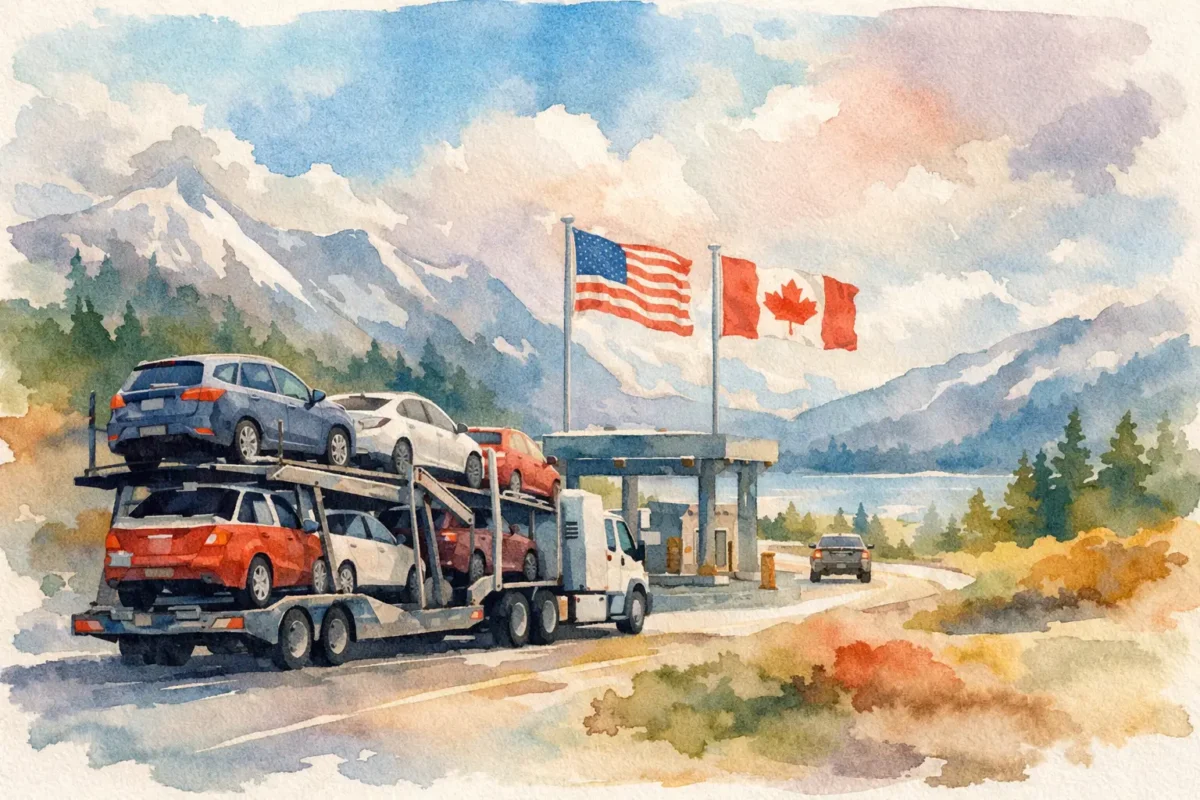
A vehicle can be loaded on a carrier in the morning and still miss its border crossing if the title, export filing, recall status, or customs entry is not ready. That is why cross-border vehicle transport is not simply a trucking job. It is a coordinated process involving the vehicle, its paperwork, regulatory requirements, border timing, and final delivery.
For a private buyer bringing home an auction purchase, a dealer moving inventory, or a commercial operator relocating a truck or trailer, the right plan prevents expensive storage, delays, and avoidable border problems. The carrier matters, but so does everything that must happen before the truck reaches the port of entry.
Vehicle Transport Starts Before Pickup
The first question is not always, “How fast can you ship it?” A better question is, “Is the vehicle ready to move across the border?” A vehicle can be physically operable and still be unprepared for export or import.
For U.S. exports to Canada, the original title or qualifying ownership document generally must be submitted to the appropriate U.S. Customs and Border Protection export office at least 72 hours before export. This requirement is tied to the vehicle identification number and the specific crossing. Sending paperwork late, sending it to the wrong office, or changing the crossing after submission can interrupt the move.
Vehicles entering the United States may require coordination around federal safety and emissions requirements. Depending on the vehicle’s age, origin, and configuration, documentation related to NHTSA, DOT, EPA, and Customs requirements may be needed. Vehicles entering Canada can involve Registrar of Imported Vehicles processing, recall clearance, and admissibility checks.
These requirements vary by vehicle and transaction. A late-model passenger car, an older collector vehicle, a semi tractor, an RV, and a piece of construction equipment do not necessarily follow the same path. Good transport planning begins with a review of what is moving, where it is going, who owns it, and which border formalities apply.
Choose the Right Type of Vehicle Transport
The transport method should fit the vehicle, its condition, its value, and the route. The cheapest option is not always the best value if it creates exposure, restrictions, or delays.
Open vehicle carriers are a practical choice for many standard cars, pickups, dealer units, and auction purchases. They are widely available and generally less expensive than enclosed service. The trade-off is exposure to weather, road debris, and normal highway conditions.
Enclosed transport is often preferred for high-value collector cars, specialty vehicles, luxury vehicles, or vehicles with fresh restoration work. It costs more, but it provides greater protection and more privacy. For a vehicle purchased through a specialty auction or a private sale, that added protection may be worth the difference.
Inoperable vehicles require special planning. A carrier needs accurate information about whether the vehicle rolls, steers, brakes, starts, or needs a winch. If a vehicle is described as operable but cannot be loaded, the pickup can fail or result in additional charges. The same applies to modified vehicles with low ground clearance, oversized tires, roof racks, or non-standard dimensions.
Commercial equipment brings another layer of planning. Semi tractors, buses, trailers, RVs, machinery, and heavy-duty trucks may need specialized trailers, permits, route coordination, or loading equipment. Dimensions and weight affect both pricing and the type of carrier that can safely handle the load.
Documentation Is Part of the Load
Border agencies do not view a vehicle as just cargo. They need to establish ownership, identify the vehicle, and verify that the import or export is properly declared. A missing document can hold up a shipment even when the transport truck is ready.
Before arranging pickup, confirm the core documents required for the transaction. These commonly include the title or ownership document, bill of sale, vehicle identification number details, buyer and seller information, and any required authorization for a broker or carrier to act on your behalf. Dealers and businesses may also need supporting commercial documents.
Canadian-bound vehicles may require recall clearance documentation and RIV-related records. U.S.-bound vehicles may require forms and compliance documentation based on federal import rules. If financing is involved, check early whether the lender will release the title or provide the documents required for export. A lien can create complications if the ownership paperwork is not available in time.
Do not assume that a clean title automatically means a vehicle is admissible. Branding, salvage history, modifications, prior market designation, and vehicle age can affect eligibility or the paperwork needed. The details should be reviewed before money changes hands whenever possible.
Border Timing Can Make or Break the Move
A cross-border shipment has more fixed timing than a domestic move. Transport schedules, 72-hour export notice requirements, customs operating hours, inspections, storage availability, and carrier capacity all have to align.
This is especially important for auction buyers. Auction release dates, storage deadlines, and title delivery do not always line up. A vehicle may be available for pickup before its title is ready for export, or the title may arrive after a storage clock has started. Planning for those gaps can prevent rushed decisions and unnecessary fees.
The chosen border crossing also matters. The export title submission must correspond to the proper U.S. export location, and carrier routing should be established before documents are filed. Changing plans midway may sound simple, but it can require new coordination and extend the timeline.
Weather and seasonal volume are practical considerations as well. Winter conditions can affect carrier routes and loading schedules. Busy periods can reduce capacity, particularly for enclosed carriers and specialized heavy-haul equipment. If delivery is tied to a business launch, a sale date, or an equipment deadline, build in a reasonable buffer.
Customs Clearance and Transport Need One Plan
Many customers make the mistake of treating customs and transportation as two separate jobs. They hire a carrier first, then start asking how the vehicle will clear the border. That approach can work for a simple transaction, but it increases the risk that the truck arrives before the entry is prepared.
A coordinated plan connects the transport schedule with customs release, export filings, and entry documentation. It also identifies where the vehicle will wait if paperwork, inspections, or delivery timing do not line up. Storage near a major border hub can be useful when a unit needs to be held securely before or after crossing.
This coordination is particularly valuable for dealers moving multiple units. Rather than managing a separate carrier, customs process, export notice, and delivery schedule for every vehicle, a single operational plan can reduce handoffs and create more predictable movement. The same principle applies to a private buyer who has never imported a vehicle before: fewer disconnected parties usually means fewer surprises.
Bidbuy Importers coordinates customs brokerage, compliance support, export documentation, storage, and nationwide transportation for vehicles moving between the United States and Canada. That end-to-end approach is designed for transactions where the border process is as important as the road miles.
Prepare the Vehicle for Pickup and Delivery
Once the paperwork and schedule are confirmed, prepare the vehicle like a shipment, not just a personal car. Remove loose personal items unless they have been specifically approved for transport. Carriers and border authorities may restrict what can be inside the vehicle, and personal belongings can create customs, damage, or insurance issues.
Document the vehicle’s condition before pickup with clear, dated photos from all sides, including the roof, wheels, interior, and any existing damage. Keep a record of the odometer reading and VIN. At pickup and delivery, review the inspection report carefully before signing. If you notice new damage, note it on the report immediately rather than waiting until the carrier has left.
Leave enough fuel for loading and unloading, but avoid a full tank unless the carrier directs otherwise. Provide working keys, disclose alarms or immobilizers, and tell the dispatcher about mechanical issues. Accurate information helps the driver load the vehicle safely and keeps the schedule on track.
Get the Details Right Before the Truck Rolls
The strongest cross-border moves are usually the least dramatic because the details were handled early. Confirm the VIN, ownership documents, pickup location, vehicle condition, border crossing, compliance requirements, customs plan, and delivery contact before dispatching a carrier.
If any part of the transaction is unclear, address it before pickup rather than hoping it can be solved at the border. A properly planned move protects the vehicle, supports legal compliance, and gives you a much better chance of receiving it where and when you expect.